Weak vs Stiff Arrow Spine: Symptoms, Flight Signs & Fixes
This is the full diagnosis manual. The quick verdicts stay on the arrow spine calculator, which keeps its symptom summary block and links here; this page holds the complete symptom tables, paper-tear chart, bare-shaft planing workflow, and the fix ladder in the order that actually works.
Spine Fix Path Comparison Matrix
Every direction below is written for a right-handed shooter and reverses left↔right for left-handed. Fix paths are ordered cheapest-first; work down the rows only as far as the diagnosis requires.
| Method | Complexity | Time | Risk / Cost |
|---|---|---|---|
Point weight, ±25 gr steps✓ Best Practice | Low | ≈5 min per dozen (screw-in points) | Cheapest fix (a few dollars per point); shifts FOC slightly |
Cut length, each ½″ step | Medium | ≈30 min at a pro shop with a cut saw | Irreversible — cut one test shaft first |
Insert / outsert weight system | Medium–High | ≈1 hr refit + full re-tune | Moderate cost; bigger FOC swing than points alone |
One-grade shaft swap | High | Days: rebuild the dozen + re-tune | Highest cost; the honest fix when rungs 1–3 cannot close the gap |
Buying new arrows before checking point weight✕ Deprecated | High | Days wasted if a $2 point was the real fix | Full dozen cost spent on the wrong rung |
Most diagnosed gaps close at rung 1–2. Rung 4 (shaft swap) is the exception for large gaps, not the routine opening move.
Weak vs Stiff Arrow Spine: The 30-Second Symptom Table
Every spine question ends at the same five observations, and every one of them splits cleanly into a weak side and a stiff side — for a right-handed shooter, the nock kicks right and the arrow lands left when the spine is weak, and the nock kicks left while the arrow lands right when the spine is stiff. Read the table top to bottom the next time a group misbehaves: two matching rows is a suspicion, three is a diagnosis. This is the same direction convention the calculator's verdict block uses, so your tool result and your range observations always speak the same language.
| Sign (right-handed) | Too Weak (under-spined) | Too Stiff (over-spined) |
|---|---|---|
| Nock at launch | Nock kicks right off the string | Nock kicks left off the string |
| Paper tear (3 yd) | Right tear — often long and dramatic | Left tear — clean and consistent |
| Bare shaft vs fletched | Bare shafts impact left of the fletched group | Bare shafts impact right of the fletched group |
| Broadhead vs field points | Broadheads plane left and group poorly | Broadheads plane right and group poorly |
| Flight look | Wiggly, porpoising; possible rest slap on launch | Rigid, “dead” launch; no visible flex recovery |
| Fix direction | Stiffen: lighter points, shorter cut, stiffer shaft | Soften: heavier points, longer cut, softer shaft |
⚠️ Left-handed shooters: reverse every left/right in this table. A left-handed archer with a weak spine sees the nock kick left and bare shafts land right; a stiff spine kicks the nock right and lands bare shafts left. Vertical observations (tail high, tail low) do not reverse — they belong to nock-point height more than to spine, as Section 3 explains.
Running the 30-second check takes one end of the range, not a full session:
- Watch one arrow all the way to the target and note which way the nock swung at launch — a right kick points weak-side, a left kick points stiff-side (right-handed).
- Shoot one arrow through paper at 3 yards and note the tear direction.
- If you own bare shafts, note whether they land left or right of the fletched group at 20 yards.
- Count the matching rows in the table above — two matches is a working diagnosis, three is a confident one.
Over-Spined vs Under-Spined: The Full Comparison Matrix
Terminology first, because the search phrases mix freely: over-spined means the arrow is too stiff for the bow (spine number too low for the poundage), and under-spined means it is too weak (number too high). Neither word describes a defect in the shaft itself — the same 400 is perfectly over-spined on a 50 lb bow and hopelessly under-spined on a 70 lb one. The matrix below grades each symptom by how far the setup has drifted, so you can tell a half-grade trim from a full-grade rebuild before you spend anything.
| Symptom | Weak — early (≈½ grade) | Weak — severe (≥1 grade) | Stiff — early (≈½ grade) | Stiff — severe (≥1 grade) |
|---|---|---|---|---|
| Launch | Slight nock-right nudge | Violent right kick + audible rest contact | Crisp but slightly left-biased launch | Pronounced left kick; shaft never appears to flex |
| Paper tear | Short right tear, ≈1″ tail | Long dramatic right tear, sometimes angled | Small left tear, very repeatable | Long left tear, identical every shot |
| Bare shaft | Drifts a touch left of fletched | Clearly left; will not merge at any distance | A touch right of fletched | Clearly right; merges only at very short range |
| Broadhead | Opens groups slightly | Planes left; broadhead groups unusable | Small right offset | Planes right; the classic broadhead-tune failure |
| Grouping | Acceptable with field points at short range | Scattered; bare shafts and fletched diverge | Field points still group — masks the problem | Groups open with distance; arrows won't group reliably |
One asymmetry is worth internalizing: early-stage weakness shouts and early-stage stiffness whispers. A half-grade-weak arrow wiggles visibly and slaps the rest, so most archers fix it within a session. A half-grade-stiff arrow shoots field points well enough to win club nights — and then loses a season of broadhead practice to a rightward plane nobody thought to check. That asymmetry is why the bare-shaft check in Section 3 matters even when flight “looks fine.”
How to Tell if Your Arrow Spine Is Too Weak: Flight & Paper Signs
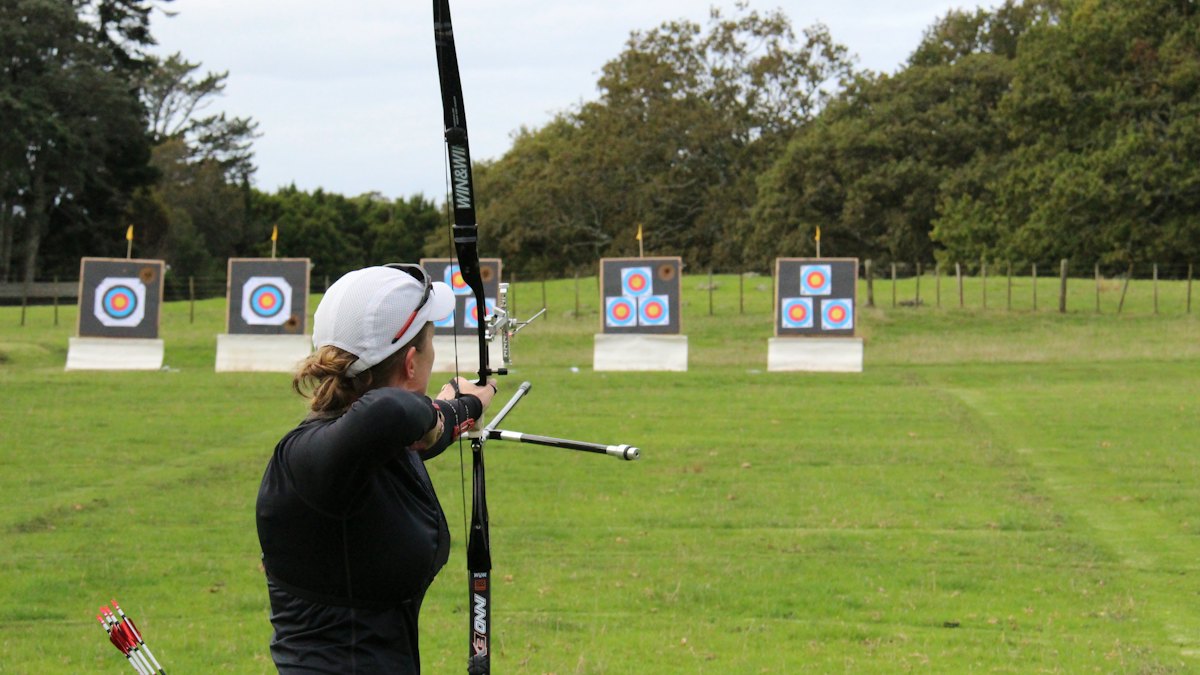
Weak-spine symptoms — the searches phrase them as weak arrow spine symptoms, arrows with too flexible spine, or shooting arrow too weak of spine — all describe one physical event: the shaft flexes more than the bow's energy requires, over-recovers, and flies half-crabbed while its tail searches for straight. What happens with too light a spine arrow, in practice, is that every downrange behavior picks up a rightward rotation at launch and a leftward landing bias (right-handed). Here is how to confirm the call, sign by sign.
Tail-High Flight: Supporting Evidence, Not a Verdict
The arrow flight tail high spine question deserves an honest answer: vertical attitude is the weakest of the spine signals. A weak shaft that over-recovers often porpoises — a snaking, nose-up-tail-down then reversed oscillation — and immediately after launch the over-flexed shaft can drag across the rest hard enough to ride tail-high for the first few yards. That tail-high wobble is real and worth noting. But nock-point height and rest timing tilt the tail vertically too, so tail-high flight alone never convicts the spine. Log it as supporting evidence, then let the horizontal signs below carry the verdict.
Paper Tear Reading: The 3-Yard Snapshot
Paper tuning at about three yards converts flight into a diagram you can pin on the wall. Shoot through copier paper stretched in a frame and read the tear the arrow-hole leaves behind. The horizontal component is spine's home turf: a right tear (tail of the tear swings right of the hole) on a right-handed rig is the signature weak-side tear, and it is usually the longest, most dramatic tear in the whole tuning vocabulary because the over-flexed shaft exits the paper still angled. The vertical component belongs to nock height, so a diagonal tear should be read for its horizontal lean — up-right or down-right are both weak-side tears; only the horizontal lean counts for spine.
❌ Don't paper-tune through a bad release: a fist-grip or punching trigger adds torque that writes its own left-right signature into the tear, and no point weight will fix it. Two identical tears from two identical shots is your green light that the paper is telling the truth about the shaft.
Bare Shaft Planing: The 4-Step Diagnosis
The bare shaft arrow spine test is the most honest instrument in tuning because fletching — the thing that hides spine errors — is removed from the equation. Bare shaft planing takes ten minutes and no gear beyond the arrows you already own. Follow the four steps in order, and remember the core reading rule for a right-handed shooter: bare shafts left of the fletched group = weak spine; bare shafts right = stiff spine.
- Shoot the control group. Three fletched arrows with field points at 20 yards, same point of aim. Circle the group on the target face — this is the “tuned” reference your bare shafts will be compared against.
- Shoot the bare shafts. Two or three unfletched shafts from the identical setup, identical point weight, same distance, same aiming point. Do not correct your aim between shots; the offset is the data.
- Read the horizontal offset. Bare shafts landing left of the fletched circle indict the spine as too weak (under-spined); landing right indicts it as too stiff (over-spined). Vertical offset mostly reflects nock-point height — note it, but don't let it vote on spine.
- Re-test after every fix. Apply one rung of the fix ladder below, then repeat steps 1–3. Bare shafts merging into the fletched group is the finish line — at that point the dozen is dynamically matched, not just spec-matched.
Bare-Shaft Quick Reference
| What the bare shafts do (RH) | Verdict | Next move |
|---|---|---|
| Land left of the fletched group | Too weak (under-spined) | Stiffen — rung 1, lighter points |
| Land right of the fletched group | Too stiff (over-spined) | Soften — rung 1, heavier points |
| Merge into the fletched group | Tuned | Stop — fletch the dozen, log the setup |
| Land high or low only | Nock point, not spine | Adjust nock height, re-shoot the test |
How to Tell if Your Arrow Spine Is Too Stiff
The stiff-side story — searched as arrow spine too stiff fix, too much spine arrows, shooting an arrow with too much spine, or signs of over spined arrows — is the mirror image of the weak side, with one behavioral twist: it hides. An over-stiff shaft flexes less than the launch requires, so instead of wrapping around the riser it flies with an incomplete recovery and a slight crab-angle the fletching papers over at field-point distances. For a right-handed shooter the signature set reads: nock kicks left at launch, left tear on paper (small, clean, and eerily repeatable), bare shafts landing right of the fletched group, and broadheads planing right of field points. The effect of too much arrow spine grows with distance: field-point groups that looked fine at 20 yards open steadily at 40, and broadhead groups fall apart completely.
The arrows won't group scenario deserves its own paragraph, because it is where arrow spine vs grouping arguments go to die. If field-point groups are scattered and the scatter direction changes day to day, spine is usually not the culprit — inconsistent spine produces consistent misbehavior, not random misbehavior (Section 7 covers the usual suspects). But there is a genuinely stiff-side grouping failure with a precise fingerprint: groups that are tight at 20 yards, open at 30, and hopeless at 50, with every impact biased right and broadheads worse than field points. That pattern — arrows won't group spine to stiff — means the shafts never fully recover and steer by increments the whole way downrange. When that fingerprint shows, stop blaming form and run the fix ladder.
⚠️ The broadhead trap: over-stiff arrows are the most common cause of broadhead flight problems on compound bows, precisely because the field-point groups mask them. If your broadheads plane right (right-handed) while field points group, do not chase rest micro-adjustments — walk the stiffness out of the arrow first, then re-tune the rest.
The Fix Ladder: How to Change Arrow Spine in the Right Order
Changing arrow spine is ladder work, not a leap: every rung trades a little money or permanence for a predictable shift in dynamic spine, and the rules of thumb are stable enough to plan around. One terminology warning before the first rung, because half of all arrow spine tuning arguments are just vocabulary: “how to increase arrow spine” means opposite things to different people. Increasing stiffness means a smaller deflection number; increasing the number means a softer shaft. This page always says stiffen or soften and states the number direction alongside it, and the same courtesy applies to how to decrease arrow spine, how to soften the spine of an arrow, and how to weaken arrow spine — all four phrases map onto the two directions below.
Two Directions, One Ladder
Whichever phrase brought you here, the mechanics reduce to one grid — every tuning tool pushes the arrow stiffer or softer, and each row is the same tool read in opposite directions:
| Tool | To STIFFEN (smaller number) | To SOFTEN (bigger number) |
|---|---|---|
| Point weight (rung 1) | Lighten by 25 gr — ≈ half a grade stiffer | Add 25 gr — ≈ half a grade softer |
| Cut length (rung 2) | Trim ½″ shorter — ≈ quarter- to half-grade | Shoot longer / buy uncut — you cannot re-grow a shaft |
| Insert / outsert (rung 3) | Lighter front hardware | Heavier front hardware — bigger FOC swing |
| Shaft label (rung 4) | One grade stiffer (e.g. 500 → 400) | One grade softer (e.g. 340 → 400) |
Spine Fix Effect Estimator
Pick the symptom you actually observe and set your bow's draw weight — the estimator returns the diagnosis, the rung to start on, and the rule-of-thumb impact of each step. All direction calls match the calculator's verdict block, right-handed.
Arrow is TOO WEAK (under-spined) — dynamic spine must be stiffened
- ▸Rung 1 — lighten points by 25 gr: ≈ half a grade stiffer (rule of thumb: 50 gr ≈ one full grade).
- ▸Rung 2 — trim ½″: each half inch cut stiffens ≈ a quarter- to half-grade; irreversible, so cut one test shaft first.
- ▸Rung 3 — swap to a lighter insert/outsert system if front weight must stay.
- ▸At ≈60 lb, hardware alone often cannot close the gap — plan on the shaft-swap rung (see the case study below).
💡 Tip — mirror check for left-handed shooters: the estimator reads right-handed symptom labels. Left-handed archers should mentally swap the kick and landing directions — a left-side kick with right-side landings is the weak-side call for you — and every fix rung below applies unchanged.
The Four Rungs, Quantified
Each rung below states its direction and its rule-of-thumb magnitude. Two honest disclaimers: these are tuning rules, not lab constants — real shafts vary by material and wall design — and every rung assumes you re-verify with paper or bare shafts before climbing higher.
The cheapest, fastest, reversible trim — screw-in points and weight systems change nothing permanently. Rule of thumb: 50 grains of point weight ≈ one full spine grade, so ±25 gr ≈ half a grade. Heavier point weakens (softens) the shaft; lighter point stiffens it. This is the recommended opening move for every diagnosed gap up to about half a grade, and the first trim after any shaft purchase.
Cutting shorter stiffens; leaving the shaft longer softens. Shop rule of thumb: each ½″ trimmed ≈ a quarter- to half-grade stiffer, or roughly 2–3 lb of draw-weight equivalent, varying by shaft. The catch is permanence — you cannot uncut — so trim one test shaft, re-shoot the paper test, and only then commit the dozen. Ways to increase arrow spine stiffness without shortening the arrow, for when the saw is not an option: lighter points (rung 1), a lighter insert/outsert system (rung 3), or a stiffer-labeled shaft (rung 4).
Adjustable-weight inserts and outsert systems are rung 1 with a bigger dial: heavier front hardware weakens dynamic spine, lighter hardware stiffens it, with swings larger than points alone allow. The trade is front-of-center balance — big outsert shifts move FOC enough to change trajectory and wind behavior, so re-verify sight tape after retuning. This rung suits archers who need a half-to-full grade of change but have already spent their point-weight range.
The honest fix when the diagnosed gap is 1.5 grades or more: rungs 1–3 cannot close that distance without wrecking arrow weight and FOC. Buy to a calculated grade rather than a shelf guess — the spine chart and the calculator both produce a number in seconds — then treat the new dozen as raw material for one more trim pass. The case study below shows exactly when this rung triggers.
💡 Tip — fix the cheap end first: the ladder is ordered by cost and reversibility for a reason. A $2 point change is a five-minute experiment; a wrong dozen is a season's budget. Run each rung one dozen-at-a-time, log the tear and bare-shaft offset after every change, and you will almost never need rung 4. For the full math behind your specific bow, draw length and point setup, the arrow spine calculator computes a dynamic-corrected grade, and the arrow spine chart shows the whole draw-weight grid at a glance.
❌ Don't climb the ladder backwards: buying new arrows before checking point weight is the Deprecated path in the matrix above for a reason — it spends rung-4 money to solve a rung-1 problem, and the new arrows inherit the old point weight, so they arrive mis-tuned too. Diagnose, trim, verify, then buy only if the math says the gap is beyond hardware.
Case Study: 500 Spine Arrows Through a 70 lb Bow
This is the most common heavy-bow mismatch in the inbox, and it walks the entire ladder in one story. The rig: a 70 lb compound, 29″ draw, wrist release, 100 gr field points, and a dozen 500 spine arrows cut to 29″ — a reasonable-looking setup if you matched arrows to your old 55 lb bow and then turned the limbs up without re-buying. The question is not whether the arrows are wrong; it is how wrong, and whether hardware can save them.
- Paper, 3 yards: long right tears, angled, repeatable — the weak-side tear from Section 3. First strike.
- Bare shafts, 20 yards: landing well left of the fletched group, refusing to merge at any distance. Second strike, and it confirms the tear: the diagnosis is too weak (under-spined), not a rest problem.
- Check the chart: 70 lb at a 29″ draw with 100 gr points sits in the 400 band — stiffer still for aggressive cams, longer draws, or heavier heads. The 500s are more than a full grade soft; this is severe-side on the Section 2 matrix.
- Walk the ladder anyway, to learn the limits: lighten points 100 → 75 gr ≈ half a grade stiffer; trim to 28.5″ ≈ another quarter- to half-grade. Total ≈ one grade recovered — and still short of 400 behavior, with arrow weight and FOC now degraded as a bonus cost.
- Rung 4 triggers: rebuild on 400 spine. For this same 70 lb bow at a 29.5–30″ draw, an aggressive cam, or a 125 gr+ head, the right grade drifts into 340–350 territory instead.
The mirror check matters too: a 340 shaft on a 55 lb bow is the identical mistake running stiff-side — left tears, rightward-planing broadheads, bare shafts right of the group. Same ladder, opposite direction. If your numbers land near either edge of this case, the 400 spine arrows guide and the 340–350 spine arrows guide carry the full draw-weight bands and buying notes for the heavy-bow grades, and the spine calculation walkthrough shows how the starting number was derived before the ladder trim began.
Why the Ladder Tops Out at 70 lb
High-poundage bows expose the ladder's limits because the stiffness tools work in half-grade steps while the bow moves in full grades. Lightening points eventually collides with a sane front-of-center balance, trimming length collides with spine-to-weight ratios you cannot undo, and every recovered half-grade costs arrow speed and downrange margin. Past roughly a grade and a half of diagnosed error, hardware is spending money to arrive at a worse arrow — which is why the case above ends at a rebuild instead of a trim.
When Wrong Spine Is Actually Something Else
Shooting wrong arrow spine is the diagnosis everyone reaches for first, because spine is the variable the internet talks about most. But several other failures produce tear shapes and impact offsets that mimic weak or stiff shafts, and fixing hardware before ruling them out wastes a tuning session. Run this exclusion checklist before you touch a single point weight — each item takes less time than a dozen rebuild.
- ✓Rest position and timing. A rest hanging a sixteenth-inch off center-shot writes left-right tears that no point weight will cure, and a launcher that cycles late adds launch noise that looks like weak-side slap. Center-shot and timing first — they are free to check.
- ✓Hand-release torque. Finger shooters: a gripping hand rolls the bow on the shot and steers the tear. The tell is inconsistency — torque tears wander shot to shot, while spine tears repeat identically. Shoot three arrows with a form anchor you trust before believing any paper session.
- ✓Poundage and draw-length drift. Limb bolts backed off after the arrows were bought soften the bow-side of the equation; a draw length that crept longer does the same from the arrow side. Re-measure what the bow actually pulls at your actual draw before diagnosing the shaft.
- ✓Fletching contact. A vane kissing the rest or the shelf produces a distinct kick-and-noise signature that bare shafts — with no fletching — will not reproduce. If bare shafts group and fletched arrows don't, it's clearance, not spine.
- ✓Mixed arrows. One soft shaft in a dozen poisons the group and the diagnosis with it. Weigh-sort and spin-check the set first; a single outlier explains a “tune problem” that was really an inventory problem.
The reverse also holds: if the checklist comes back clean, the tear direction is repeatable, and the bare-shaft offset matches it, trust the diagnosis. Spine symptoms are among the most repeatable behaviors in archery — that consistency is exactly what makes the 30-second table at the top of this page worth memorizing.
Frequently Asked Questions
Which way does a weak spine arrow go?Top Question▼
For a right-handed shooter, a weak (under-spined) arrow does two opposite-looking things at once: the nock end kicks right at launch while the arrow lands left — bare shafts group left of the fletched arrows and broadheads plane left of field points. That is why searches like “arrow goes right if spine weak” cause confusion: the kick you watch at the bow goes right, the impact you find on the target goes left. Both are weak-side signs. Left-handed shooters see the mirror image: kick left, land right.
Check your spine with the calculatorWhat happens if you shoot an arrow spine that is too stiff?Top Question▼
A stiff (over-spined) arrow does not flex enough to wrap around the bow cleanly. For a right-handed shooter the nock kicks left at launch, paper tuning shows a left tear, bare shafts land right of the fletched group, and broadheads plane right of field points — over-stiff arrows are the most common cause of broadhead flight problems on compound bows. Flight looks rigid and “dead” rather than wiggly. The fix is to soften: heavier points, a slightly longer cut, or one grade softer shaft.
How can I tell if my arrow spine is too weak without paper tuning?Top Question▼
Use bare-shaft planing: shoot a fletched group at 20 yards, then shoot two or three unfletched shafts from the same spot with the same point weight. On a right-handed rig, bare shafts landing left of the fletched group signal a weak side. Supporting evidence: a visible nock-right kick at launch, a snaking or porpoising flight, and a scraping sound as the over-flexed shaft drags the rest. Two of those three flight signs plus a left-hitting bare shaft is a confident weak call.
Measure static deflection with the spine testerOver-spined vs under-spined arrow — which is worse?▼
They are mirror problems: over-spined means the arrow is too stiff for the bow, under-spined means it is too weak. Under-spined arrows usually announce themselves — wiggly flight, rest contact, dramatic right tears (right-handed) — so they get fixed early. Over-spined arrows hide: the launch looks crisp, field points still group acceptably, and the damage concentrates in broadhead flight and rightward planing. For hunting setups the stiff side is arguably the more dangerous miss because it shows up exactly when you screw on a broadhead.
Can you over-spine your arrow by accident while tuning?▼
Yes, in the other direction. Adding point weight softens dynamic spine, so front-weight tuning can under-spine (weaken) an arrow if you overshoot. Over-spining usually comes from the label side: a shaft grade too stiff for the bow, an aggressive short cut, very light points, or dropping draw weight after the arrows were matched. The trim direction is symmetrical — lightening points, lengthening the shaft, or adding front weight all walk the arrow back toward center from either side, so re-test with paper or bare shafts after every change.
Are smaller spine arrows heavier?▼
A smaller spine number means a stiffer shaft, not a lighter one — the number is deflection (inches of bend under the standard test), so 340 is stiffer than 500. And within a given carbon line, the stiffer shafts are usually built with thicker walls or larger diameter, which means higher grains-per-inch and a heavier finished arrow. So the counterintuitive answer is yes: smaller-number (stiffer) arrows in the same model line commonly weigh more per inch than the softer grades, and they also tend to run slightly larger in diameter.
How much does cutting half an inch change arrow spine?▼
Shop rule of thumb: every ½″ trimmed stiffens the arrow noticeably — often estimated around a quarter- to half-grade depending on the shaft, or roughly 2–3 lb of draw-weight equivalent. It varies by material and wall thickness, which is why it is a trim tool rather than a precision dial. The practical warning is bigger than the math: cutting is irreversible, so trim one test shaft ½″, shoot it against the untrimmed pair, and only then commit the dozen.
Walk through the spine math firstWhat does “too heavy spine on an arrow” actually mean?▼
It is loose phrasing for an over-spined arrow — a shaft that is too stiff for the bow. Spine measures stiffness, not weight, so “heavy spine” and “heavy arrow” are different problems: a heavy arrow carries more total grain weight, while a heavy (stiff) spine resists flexing. If someone says their spine is “too heavy” and describes left tears and rightward-planing broadheads on a right-handed rig, they are describing classic over-spined behavior — soften with front weight or move one grade up the number ladder.
Does a weak arrow fly tail high?▼
Vertical attitude is the least reliable spine signal, so treat it as supporting evidence only. A weak shaft over-recovers and can porpoise — a snaking up-and-down motion — and right after launch an over-flexed shaft dragging across the rest often rides tail-high for a few yards. But nock-point height and rest timing also tilt the tail, so tail-high flight alone is not a verdict. Use the horizontal signs for the call (nock kick, tear direction, bare-shaft offset) and let the tail-high wobble confirm a weak-side suspicion.
How does being over-spined affect arrow flight at long distance?▼
Downrange, an over-spined arrow never fully steers itself straight. The launch is rigid but the recovery is incomplete, so the shaft flies slightly nose-right of its own centerline with the tail trailing left on a right-handed rig. Field points drift right at distance and groups open up as yards increase; broadheads magnify the tilt and plane visibly right. Wind also exposes it: a shaft flying half-crabbed catches crosswind differently shot to shot, which reads as random drift even when your form has not changed.
Will heavier arrows fix weak-spine symptoms?▼
Not reliably. Total arrow mass and launch speed both shift dynamic spine — a slower, heavier launch generally flexes the shaft more, which reads weaker, the wrong direction for a weak-side problem. The same logic applies to speed bows: turning limb bolts up stiffens the system, turning them down softens it. Those are quarter-trims at best, not fixes. If the diagnosis is weak, the fix ladder still runs front-weight-lightening → shorter cut → lighter outsert → stiffer shaft, verified by bare shafts after every step.
When should I stop tuning and just buy new arrows?▼
Three honest stop signals: the diagnosed gap is roughly 1.5 grades or more, so rungs 1–3 cannot close it without wrecking arrow weight and FOC; bare shafts still separate from the fletched group after two full ladder passes; or you are about to buy a dozen and need a different grade anyway. When you do swap, buy to a calculated number rather than a shelf guess, then treat the new dozen as raw material for one more trim pass.
Match your bow on the arrow spine chartKeep tuning: bookmark the arrow-calculator.com homepage for the calculator suite, browse all archery calculators for the full tool grid, or continue through the guides library for the rest of the spine and arrow-flight manuals.
Related Guides & Tools
01Wood Arrow Spine Calculator
Wood arrow spine calculator: pick bow type, draw weight, arrow length and wood species to ...
02Aluminum Arrow Spine Chart
Aluminum arrow spine chart: decode 4-digit codes (1716–2317) into diameter, wall, deflecti...
03Do Arrows Spin in Flight? Arrow Rotation Physics Explained
Flight-physics explainer of arrow rotation: why bows add no rifling, offset and helical fl...
04What Is Arrow Spine? Numbers, Ratings & Stiffness Explained
Concept pillar for arrow spine: the AMO 1.94 lb / 26 inch deflection definition, the small...
05Recurve Arrow Spine: Recurve, Longbow & Horsebow Guide
Traditional-bow spine selection guide: finger-release dynamic spine physics, strike plate ...