500 Spine Arrows: Recurve, Traditional & Light Compound
A five-step derivation that turns your bow's real numbers into a 500 verdict, a cut length, and a model shortlist — Easton 500-series carbon, Gold Tip Hunter and Traditional 500-class shafts, feathered traditional setups, and the light-compound column for 40–50 lb shooters. The full 500→1400 decision tree lives on the 500 Spine Arrows tool page.
Draw weight → draw length → point weight → release → verdict, each with a worked number.
A 500 shaft bends 0.500″ under a 1.94 lb load on a 26″ span — higher number, softer arrow.
Finger-release recurve and traditional bows; light compounds at the stiff edge of the window.
500 Spine Arrows and 500 Spine Carbon Arrow Shafts, Decoded
When shoppers type spine 500 arrows or arrows 500 spine into a search box, they are usually holding one of three bows: a 40–50 lb recurve, a traditional longbow or horsebow, or a light compound in the hands of a woman or an advancing youth archer. All three land on the same grade, and this page is the buying manual for it. The number itself is a deflection rating: a 500 spine arrow shaft bends exactly 0.500 inches when a 1.94-pound weight hangs from its center across a 26-inch span. That is the entire meaning of the label — 500 is a stiffness measurement, not a strength or a weight. A 600 bends farther (softer), a 400 bends less (stiffer), and every model on this page is a different way of packaging that one bending property into carbon, aluminum-jacket carbon, or feather-fletched traditional builds.
The market for 500 spine carbon arrows splits into two columns that rarely overlap: target-oriented 500 spine carbon arrow shafts sold bare and finished by the shooter, and ready-to-shoot 500 spine traditional arrows fletched with feathers and sold in the 125–175 gr point convention. Both serve the same stiffness window, but the shopping lists barely share a component. This guide walks the five-step derivation that produces your verdict, then lists the models column by column — and if you just want to see what a 500 spine arrows for sale listing should tell you before you click buy, the checklist section below covers that too.
What “Spine 500” Actually Measures
The AMO/ASTM test behind the number is worth thirty seconds because it explains every correction in this guide. Manufacturers rest a shaft on two points 26 inches apart, hang a 1.94-pound weight at the center, and measure how far the shaft deflects in thousandths of an inch. A 500 deflects 0.500″; a 400 deflects 0.400″ and is therefore stiffer; a 600 deflects 0.600″ and is softer. Nothing in the number describes draw weight, arrow weight, or quality — those are separate specs (GPI, straightness, wall thickness). The reason the single number matters so much is the archer's paradox: the arrow must flex around the riser at launch and snap back straight. If its stiffness does not match the bow's energy, it clears the rest at an angle and groups fall apart — 4–6 inch field-point versus broadhead splits at 20 yards in the bad cases. The Arrow Spine Chart holds the full lookup tables; this page teaches the derivation behind the cells.
500 Spine Arrows for Sale: Reading Listings Like a Buyer
Listing pages for the 500 grade hide four details that decide whether the arrows tune. First, confirm the printed deflection, not the marketing name — a “500” from two brands can sit a half-grade apart, and target lines publish fine increments (520, 570) instead of the round bucket. Second, check whether the listing price covers fletched-and-cut arrows or bare shafts; traditional packages often arrive at 32″ full length for you to trim. Third, read the straightness tolerance: ±0.006″ is acceptable at this grade, ±0.003″ or better is a genuine upgrade worth a few dollars per shaft. Fourth, verify the point-weight convention — traditional listings assume 125–175 gr heads, target listings assume 80–110 gr — because a dozen tuned for the wrong convention needs a different cut length. Every spec in this guide is flagged as a manufacturer-published nominal value; confirm the current sheet before ordering.
❌ Don't read 500 as a strength rating. The most expensive mistake in this grade is buying “up”: a shooter who wants a tougher arrow and picks 400 instead of 500 has actually bought a stiffer arrow, and a shooter who wants more spine and picks 600 has bought a softer one. Lower number = stiffer. Every year this single misreading sells a pile of arrows that will never tune.
The 500 Fit Window: 500 Spine Arrows Draw Weight Rules (40–50 lb)
The 500 spine arrow draw weight window is 40–50 lb on a finger-release recurve or traditional bow, anchored at 45 lb, a 28″ draw, and a 100 gr point. That anchor is not arbitrary — it is where manufacturer charts for the grade cluster, and it is the case the corrections in this guide are calibrated against. The 500 spine arrows draw weight question never has a one-number answer because four variables move the fit: draw weight itself, draw length (which sets arrow length), point weight, and release style. The window survives all of them: a 45 lb bow at a 30″ draw with a 125 gr head still holds 500, and so does a 42 lb bow with a 150 gr traditional head. What leaves the window is the combination — a 38 lb bow with a 75 gr point and a 25″ arrow drops toward 600, and a 52 lb bow at 30″ with a heavy head steps toward 400.
Two boundaries frame the grade. Below the window sits the 600 grade (35–40 lb effective), covered with its own model list in the 600 & 700 spine guide. Above it sits the 400 grade (50–65 lb compound territory), covered in the 400 spine arrows guide. This page deliberately stays inside the 500 window: the numbers, the models, and the column choices that make this grade the traditional shooter's home base.
Figure 1 — the 500 fit window at a 28″ draw with a finger release. Every variable can be traded against another: the green window holds its shape because length, point weight, and release style shift the boundaries by roughly half a grade each, not by whole grades.
⚠️ Measure the bow, not the label. Limb markings are routinely off by 2–3 lb, and at this grade 3 lb is more than half the distance to the next boundary. A 15-dollar bow scale — or the math on the Bow Draw Weight Calculator if you only know your wingspan and draw length — removes the single largest error source before you spend a cent on shafts.
The Five-Step 500 Derivation Flow
Five steps, each plugging one real number into the window, each with a worked example you can copy. The flow is calibrated to the decision tree on the 500 Spine Arrows tool page, so the verdict you derive here matches what the tree outputs for the same inputs — this page adds the why and the model picks; the tool page adds the 600–1400 grades beyond this window.
All five steps carry a verified worked example — read them in order, then run your own numbers in the calculator below.
Set the Draw-Weight Baseline
✓ Verified exampleThe 40–50 lb recurve band maps to the 500 grade, and the anchor inside it is 45 lb at a 28″ draw with a 100 gr point → 500. Weigh the bow: hang a bow scale from the string and draw to your anchor, because limb labels drift by ±3 lb and the label is marketing while the scale is physics. If your true weight reads 43, your anchor verdict does not change — 500 is a window, not a point — but the margin on each side shrinks, which is exactly what Steps 2–4 spend.
Correct for Draw Length
✓ Verified exampleEvery inch away from the 28″ anchor moves the arrow's dynamic spine by about half a grade — soft or stiff depending on direction. Worked example: a 27″ draw → the finished arrow cuts about an inch shorter, so the shaft acts half a grade stiff — the fit leans toward the stiff half-grade. For the anchor's 45 lb bow that stiff-acting margin is free insurance — the verdict holds at 500 and the arrow has room to spare. The same shift in the other direction costs margin: a 30″ draw makes the arrow act soft, so a bow sitting at the top of the weight band should expect the stiff edge of 500. In the calculator below this correction is capped at ±6 lb of effective draw weight, matching the tool page's tree.
Correct for Point Weight
✓ Verified exampleEvery ±50 grains of finished point weight moves the fit half a grade — a heavier head softens the arrow's dynamic spine, so the static pick leans stiffer to compensate. This is where the traditional convention matters: traditional bows run 125–175 gr heads, roughly 50–75 gr heavier than the 100 gr anchor, which is the mechanism that lets a 40–42 lb bow hold the 500 window. Worked example: a 41 lb recurve with a 160 gr head gains about 3 lb of effective weight — enough to keep 500 honest where the same bow with an 80 gr point belongs on 600. Target shooters run the opposite direction: an 80–100 gr screw-in point is why the target column of the 500 grade clusters at the upper half of the weight band.
Correct for Release Style
✓ Verified exampleThe whole flow is calibrated on the Mediterranean finger release, and fingers soften the arrow's dynamic spine by roughly half a grade relative to a mechanical release — barebow three-under behaves the same way, and shooting off the shelf without a plunger bends the arrow harder still, which is why boundary barebow bows take the stiffer neighbor. The correction runs the other way for light compounds: a clean mechanical-release launch makes the arrow act about a full grade stiffer, so the calculator shifts release-aid bows one grade softer — a 45 lb light compound lands at the soft side of the window while a 45 lb recurve sits at the anchor. This single correction is why the 500 grade is a finger-shooter's grade and why 50 lb+ release shooters graduate to 400.
Read the Verdict and Set the Cut Length
✓ Verified exampleStack the corrections and read the result against the window: roughly 40–54 lb effective = 500, with the top edge nudging toward 400 and the floor handing off to 600. Then set the finished length: cut the arrow to draw length + 1–1.5″ past the arrow rest or side plate (traditional off-the-shelf setups run longer still, +1–3″, because cut-length is their main tuning lever). Worked example: the 45 lb / 28″ / 100 gr anchor ends as 500, cut to 29–29.5″. Verify the whole derivation with one shaft before spending on a dozen: paper-tune it uncut at 6 feet, read the tear, and only cut when the hole is round. Run the finished-arrow math on the homepage arrow calculators once the spine is confirmed.
Parameter Impact Matrix: Five Inputs, One Verdict
| Parameter | Anchor value | Effect per unit | Boundary handling |
|---|---|---|---|
| Draw weight | 45 lb | ±5 lb ≈ half a grade (more weight = stiffer shaft needed) | Measure with a bow scale — limb labels can be off by ±3 lb |
| Draw length | 28″ | ±1″ ≈ half a grade (a longer arrow acts softer, so the pick leans stiffer) | Clamped at ±6 lb effective in the calculator |
| Point weight | 100 gr | ±50 gr ≈ half a grade (heavier head = arrow acts softer = stiffer pick) | Traditional 125–175 gr heads pull a 40–42 lb bow back into 500 |
| Release style | Mediterranean fingers | Mechanical release ≈ one grade effective (arrow acts stiffer) | Barebow off the shelf bends the arrow harder — boundary bows take the stiffer neighbor |
| Cut length | draw length + 1–1.5″ | Shorter cut stiffens dynamic spine (~½ grade per inch) | Never cut before paper-tuning one uncut shaft |
🧮 Plug in my numbers — try the 500 verdict calculator▼
The textbook 500 case (40–46 lb effective): 45 lb at a 28-inch draw with a 100 gr point is the anchor example.
Estimate only, calibrated to the finger-release baseline of the 500→1400 decision tree on the tool page. A paper-tuned uncut test shaft is the ground truth — the calculator narrows the candidate, the paper confirms it.
💡 The free tuning lever: before buying a different grade to fix a borderline fit, move point weight — 25 grains is roughly a quarter grade, and traditional heads are available from 100 to 200 gr for a few dollars. A 41 lb bow that sits between 500 and 600 usually tunes perfectly on 500 with a 150 gr head, no new shafts required. Spend the lever before you spend the dozen.
Easton 500 Spine Arrows: The 500-Series Model List
Easton is the brand most 500 buyers meet first, and its catalog covers the grade from standard diameter to micro target shafts. All GPI and weight figures below are manufacturer-published nominal values (±0.2 by production year) — confirm the current spec sheet before ordering a dozen.
Easton 6.5 MM 500 vs Axis 5mm 500
The two hunting-line pillars of the grade differ mainly in diameter. The Easton 6.5 MM 500 is the 0.246″ standard-diameter workhorse (≈ 8.0–8.5 GPI nominal; a 29″ cut with a 100 gr head finishes near 330–345 gr): the widest component availability in the grade, the friendliest arrow rest clearance for finger shooters, and the default for club recurve and entry hunting builds. The Axis 5mm 500 is the 0.204″ micro-diameter step (≈ 8.5–9.0 GPI nominal): tighter straightness tolerance, better crosswind behavior, and deeper penetration per grain thanks to the smaller frontal area — the pick for outdoor target, 3D, and bowhunting-adjacent setups that want the mass without stepping up a weight class. Both exist in the traditional-friendly configurations, and both spine-check honestly against the printed deflection.
Above the hunting lines sit the target families: the Easton Avance and the aluminum-carbon lines above it list 500-class stiffness in fine published increments — 520, 570 and neighbors — so Olympic-style target shooters typically buy the nearest fine size to their derived deflection rather than a literal “500” label. The derivation flow above still applies; only the bucket boundaries get finer.
Aluminum Equivalents: Why 1816 and 1916 Keep Coming Up
Traditional shooter forums pair every carbon spine with an aluminum code, and the 500 grade's neighbors are 1816 and 1916. Those codes encode diameter and wall thickness — 18/64″ or 19/64″ outer diameter with a 0.016″ wall — not deflection, but the shop-level equivalence is real: 1816 aluminum flies in roughly the same stiffness window as the softer side of carbon 500, and 1916 sits a step stiffer, toward the 400–500 boundary. Treat the mapping as tradition rather than specification — useful when a mentor says “shoot what my 1816s shoot like,” and useless as a substitute for the printed deflection on the carbon box.
Gold Tip 500 Spine Arrows: Hunter 500 and the Traditional 3555 Code
Gold Tip 500 spine arrows split across two naming systems, and knowing which one a listing uses is the difference between the right dozen and a shelf queen. The numeric system — Hunter 500 and its siblings — prints the deflection bucket directly. The traditional system prints a draw-weight window instead, and its most famous member is the 3555.
Gold Tip Hunter 500
The Hunter 500 is the numeric-side default (≈ 7.0–7.5 GPI nominal; a 29″ cut with a 100 gr head finishes near 310–325 gr — one of the lighter finished arrows in the grade, which is exactly why speed-minded recurve shooters like it). Gold Tip's published .003″ factory straightness and its famously shooter-friendly warranty carry real weight at a grade where arrows meet gravel, stumps, and the occasional roof rafter. If your derived verdict is 500 and you want one dozen that survives a learning curve, this is the low-regret buy — and it accepts both the 100 gr target points and the 125–175 gr traditional heads from the Step 3 correction without complaint.
Gold Tip Traditional 500-Class: Reading the Two-Number 3555 Code
The traditional series replaces the deflection number with a two-segment code: 3555 means the shaft is published for 35–55 lb bows, and its stiffer sibling 5575 covers 55–75 lb. The two numbers are the window, not a spine — so a “Gold Tip Traditional 500” search usually lands on the 3555, whose nominal deflection sits between the 400 and 500 carbon buckets and tunes onto a 40–50 lb traditional bow by cut length and point weight. That is the traditional method in miniature: buy the shaft whose window contains your bow, start it long (draw length + 2–3″), and shorten or re-head until the paper tears clean. The wood-grain finish versions (the Ted's Naturals / Traditional XT trims) add period-correct looks for longbow and horsebow shooters; the mechanics underneath are the same 3555-class carbon. Confirm the exact deflection on the current spec sheet — the traditional series' published figures sit near the 400/500 boundary, and the half-grade of doubt is settled by the paper tune, not the label.
500 Spine Traditional Arrows vs Target Arrows: Two Shopping Lists
The same stiffness serves two cultures, and 500 spine traditional arrows and target-grade 500 shafts disagree on almost every component decision. The comparison below is the fastest way to work out which column your build lives in — and which model list to order from.
🪶 Traditional column
- Feathers, 3–4″, cut long over the shelf
- 125–175 gr heads are the convention
- Tuning levers: cut length and point weight
- Gold Tip Traditional 3555, feathered carbon, wood-look builds
🎯 Target column
- Small vanes or spin-wings behind a plunger
- 80–110 gr screw-in points
- Tuning levers: plunger tension and point weight
- Easton 6.5 MM 500 / Axis 5mm 500, fine-increment target sizes
| Decision | Traditional pick | Target pick |
|---|---|---|
| Fletching | Feathers (3″ or 4″, right or left wing) | Vanes (1.8–2.1″) or spin-wings |
| Point weight | 125–175 gr field/broadhead convention | 80–110 gr screw-in points |
| Arrow length | Cut long: draw length + 1–3″ over the shelf, shortened in steps | Cut close: draw length + 1–1.5″ past the plunger |
| Tuning lever | Cut length and point weight (no plunger) | Plunger tension and point weight |
| Typical 500 pick | Gold Tip Traditional 3555, feathered carbon traditional shafts | Easton 6.5 MM 500 / Axis 5mm 500, fine-increment target sizes |
Barebow and Olympic Recurve Builds at 500
Between the two columns sit the barebow and Olympic-recurve shooters, who buy from the target list but tune with traditional tools. A barebow 500 build runs heavier points than the Olympic setup — 110–150 gr is common for indoor lines — which shifts it toward the stiff edge of the window and makes cut length the primary lever, exactly as in the traditional column. An Olympic recurve at 500 keeps the plunger as its fine adjuster and treats point weight as the coarse one. Both benefit from the same verification habit: sort the dozen on a spin-check before a tournament, and retire any shaft that runs loud on release. For wood and bamboo traditionalists, the arrow spine tester guide covers how to verify a wood shaft's rating against its carbon equivalent before mixing sets.
Feathered 500s for Traditional Setups
Feathers are the signature of the 500 grade's traditional half, and they are a tuning decision as much as an aesthetic one. Feathers weigh roughly 40–60% less than same-length vanes (manufacturer-published nominal values), which keeps tail weight down on arrows that are already light — a feathered 29″ 500 with a 125 gr head finishes 15–20 grains lighter than the vane build. Their real advantage is aerodynamic: feathers produce more drag, and drag straightens a slightly soft arrow faster in flight. That forgiveness is why the traditional column lets boundary bows sit one notch softer at a band edge — a feather-fletched 500 on a 40 lb bow behaves better than its numbers suggest, while the same stiffness under vanes would show its softness in the tear pattern.
The trade-offs are practical: feathers die in rain, catch on brush, and need occasional re-truing — a fine price for fair-weather range and field shooting, a real cost for all-weather hunts. Shoot 3″ feathers for a balance of clearance and guidance, 4″ or 5″ for longbows and horsebows with deep shelves. Right-wing or left-wing matters mainly for consistency with your rest and nock orientation, not for spine. And the durability habit: spin-test feathered shafts after every hard contact, and replace the ones that no longer run true — the spine tester guide walks the check for wood and carbon traditional shafts alike.
💡 Feather boundary rule: when your derived fit lands exactly on the 500/600 line, feathers tip the decision toward staying at 500 (their drag compensates the soft side), while a vane setup at the same boundary should take the stiffer pick. Same bow, same weight, different fletching — different verdict.
Light Compounds at 40–50 lb: Women and Advancing Youth Archers
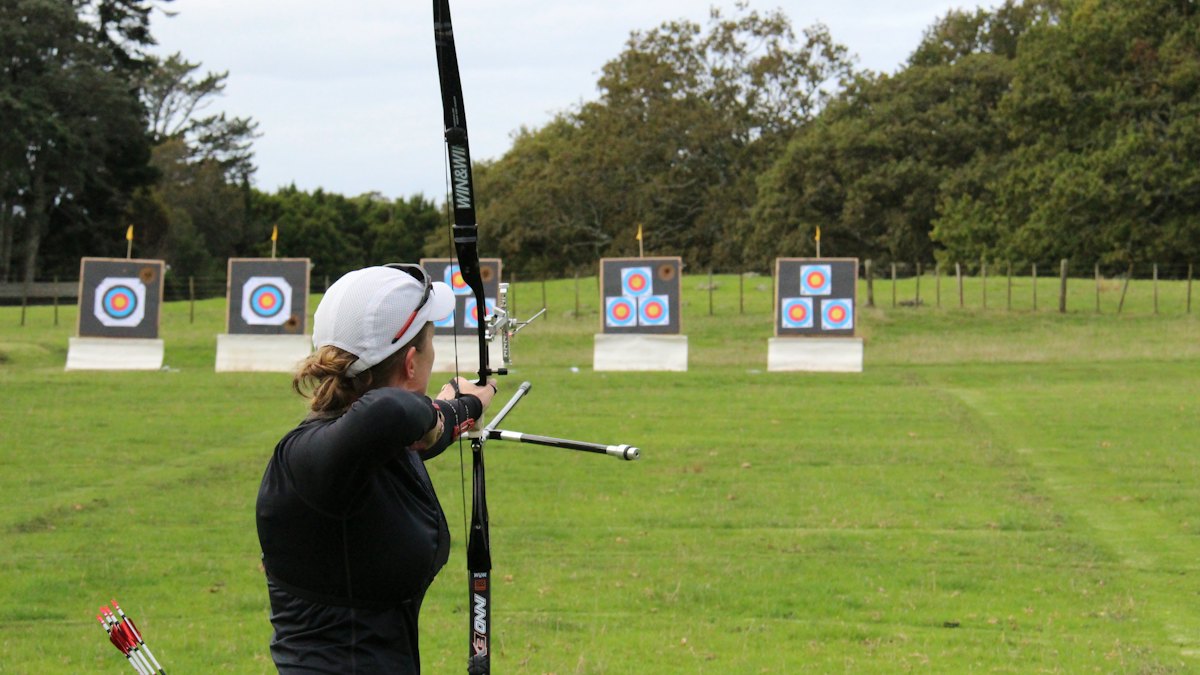
The 500 grade is also the entry door for light compounds — the 40–50 lb rigs that women and advancing youth shooters outgrow starter packages into. Two mechanics separate these bows from the recurve column at the same poundage. First, the mechanical release launches the arrow cleanly, so the shaft acts about a full grade stiffer — the Step 4 correction — which pushes light-compound fits toward the soft side of the window rather than the anchor. Second, let-off changes the hold without changing peak force: a 45 lb light compound still stores 45 lb of energy at the shot, so the spine math runs on peak weight, not holding weight.
Practical verdicts from the calculator: a 40–45 lb light compound with a 100 gr point and a 26–28″ draw sits comfortably in 500; a 48–50 lb light compound with a 28″+ draw and a 125 gr hunting head rides the 400 boundary and deserves a one-shaft test of each before a dozen. Light-compound shooters should also check the bow's minimum arrow weight requirement (usually 5 grains per pound — 200 grains minimum at 40 lb) before choosing ultralight target components; the homepage calculator suite includes the finished-weight check. When the poundage climbs past 55, the 400 spine guide is the next page in the series.
Frequently Asked Questions
500 spine arrows for what draw weight?Top Question▼
The core window is 40–50 lb on a finger-release recurve or traditional bow with a 28″ draw and a 100 gr point. The 500 spine arrows draw weight window then shifts with build details: every ±5 lb of draw weight moves the fit about half a grade, every inch of draw length about half a grade, and every 50 grains of point weight about half a grade. A 45 lb bow at a 30″ draw with a 125 gr head still holds 500, while a 42 lb bow cut to 25″ drops toward 600. Above roughly 54 lb effective, step down to the 400 grade; below roughly 40 lb effective, the 600 grade is the honest starting point.
Is 500 spine right for a 40 lb recurve?Top Question▼
It is the boundary case, and the details decide it. A 40 lb recurve at 28″ with a light 75–100 gr point sits at the soft edge of the 500 window — most of those bows tune more comfortably on a 600. The same 40 lb bow pulls back into 500 when you add front weight in the traditional range: a 150 gr head adds about 2.5 lb of effective draw weight (one-and-a-half half-grades), and a 175 gr head adds about 3.75 lb. So: 40 lb with a 100 gr point → test 600 first; 40 lb with a 150–175 gr traditional head → 500 is the correct first buy. Paper-tune one uncut shaft either way.
Is 500 spine right for a 45 lb recurve?Top Question▼
Yes — this is the textbook case the whole grade is built around. A 45 lb recurve at a 28″ draw with a 100 gr point is the anchor of the 500 window, and it stays a 500 across the common variations: 27″ draw (the shorter cut acts stiff, leaving margin), 29″ draw with a 125 gr head (the extra length and head weight roughly cancel), and 30″ draws with points up to 150 gr. The only 45 lb setups that leave the grade are extremes: a 24″ draw with a 75 gr point drifts toward 600, and a 31″ draw with a 175 gr head steps toward the 400 boundary.
Which 500 spine traditional arrows should I buy first?▼
Start with a carbon traditional shaft sized for your window: the Gold Tip Traditional 3555 (35–55 lb) is the most stocked 500-class traditional pick, and Easton's standard-diameter 500 options cover the rest. Order them fletched with 3- or 4-inch feathers, points in the 125–175 gr convention, and cut long — draw length plus 1–3″ past the shelf. Tune by shortening in half-inch steps or changing point weight, one shaft at a time. If you shoot wooden arrows as well as carbon, cross-check the carbon pick against the wood shaft's spine rating on the spine tester guide before committing to a dozen.
Are Gold Tip 500 spine arrows worth the money?▼
For most traditional and recurve shooters in this grade, yes. Gold Tip 500 spine arrows earn their price on three published strengths: a straightness tolerance backed by a warranty that covers real-world breakage, durability that survives the off-the-shelf contact traditional shooting guarantees, and consistent spine sorting dozen-to-dozen. The Hunter 500 runs about 7.0–7.5 GPI (manufacturer-published nominal), and the Traditional-series shafts run heavier in the 8.5–9.0 class for shooters who want more mass up front. If you shoot a tuned target rig off a plunger and never touch brush or gravel, a cheaper standard-diameter 500 is the better spend; for hunting-adjacent and rough-country traditional use, Gold Tip is the low-regret choice.
How do I choose between Easton 500 spine arrows?▼
Pick by diameter and job. The Easton 6.5 MM 500 is the standard-diameter all-rounder (≈ 8.0–8.5 GPI nominal) with the widest component and insert availability — the default for recurve target and light hunting builds. The Axis 5mm 500 is the micro-diameter step (≈ 8.5–9.0 GPI nominal) with tighter straightness tolerance and better wind behavior — the pick for outdoor target and 3D. Easton's target-family shafts (Avance and the lines above it) list 500-class stiffness in finer published increments such as 520 and 570, so Olympic-style target shooters usually buy the nearest fine size instead of a literal 500 label. Confirm every figure against the current spec sheet — values are manufacturer-published nominals and shift slightly by production year.
Do 500 spine arrows need feathers?▼
No — feathers are a tradition choice, not a spine requirement. At the 500 grade the fletching decision follows the bow and the use: traditional and hunting-adjacent setups take 3–4″ feathers because they weigh roughly 40–60% less than same-length vanes (manufacturer-published nominal) and their extra drag straightens a slightly soft arrow faster, which effectively lets boundary bows sit one notch softer. Target recurves and light compounds take small vanes because they last longer in a plunger-equipped rest system and hold groups better in wind at distance. The spine window itself does not move — only the boundary judgment does. When in doubt between two grades, feathers forgive soft and vanes punish it, so a vane setup takes the stiffer pick.
When should I move up from 500 to 600 spine arrows?▼
Move to 600 (a softer arrow) when your effective draw weight falls below roughly 40 lb: a 38–40 lb bow with a light 75–100 gr point, a short-draw archer whose 24–25″ arrow acts stiff for the bow, or a 500 that consistently paper-tears tail-left (too stiff). Moving up one grade is the correct fix for stiff behavior — adding point weight is only a half-measure that shifts FOC and slows the arrow. The 600 and 700 grades share the same feather-friendly traditional culture as the 500 grade, and the 600/700 guide lists the light-bow models in the same format as this page.
When does a 500 shooter step down to 400?▼
Step down (a stiffer arrow) when your setup out-grows the window: draw weight at 50 lb or more with a 29″+ draw and a 125 gr+ head, a light compound shot off a mechanical release where the clean launch makes the arrow act stiffer, or a 500 that paper-tears tail-right (too weak) even at full length with a light point. The 50 lb finger-recurve shooter at 28″ is the classic boundary case — test one 400 beside one 500 before ordering a dozen. The 400 grade's model list and fit window are covered in the 400 spine guide.
Related Guides & Tools
01400 Spine Arrows
400 spine arrows: fit windows for 45-60 lb compound and 40-55 lb recurve, when a 60 or 70 ...
02500-1400 Spine Arrows
500 to 1400 spine arrows by draw weight: 500 spine for 40-50 lb recurve, 600-900 for youth...
03Brand Spine Chart Decode
Decode spine charts for Blackout, Bloodsport, Beman, Sirius, Skylon and more: brand number...
04400 Spine Arrows: The 55-65 lb Standard
Model-matrix buyer's guide to the 400 grade: Easton Axis, 6.5 and 5.0, Gold Tip Hunter, Ca...
05600 & 700 Spine Arrows: Light Bows, Youth & Barebow
Scenario-card guide to the light grades: 600 vs 700 spine differences and conversion, feat...