Weak-Spine Grade Ladder · 500 → 1400
500–1400 Spine Arrows: Light Shafts for Recurve & Youth
The full soft half of the spine ladder as one decision tool: pick a grade from 500 down to 1400 by bow type, draw weight, arrow length, and fletching — for sub-35 lb recurves, traditional feathered setups, and youth bows. The stiff half of the scale lives on the Arrow Spine Chart.
Spine Grade Decision Tree
Your effective draw weight on the 500 → 1400 ladder (softer grades to the right).
🎯 Finger-release correction: The ladder is calibrated for a Mediterranean finger release behind a plunger or cushion rest. Shooting off the shelf with no plunger bends the arrow even harder — if you sit at the very top of the band with a 125 gr point, take the stiffer neighbor instead.
🪶 Fletching correction: Vanes add tail weight and produce less drag; on the soft grades they punish a weak arrow more than feathers do — when in doubt between two grades, a vane setup takes the stiffer one.
How the 500–1400 Decision Tree Reads Your Setup
Almost every spine article on the internet stops at 400 — the hunting-compound grade. This page is the other half of the ladder: 500 down to 1400, the grades that serve light adult recurves, traditional feathered setups, school and camp bows, and the entire youth market. The tool at the top of this page is a decision tree, not a chart to squint at. It takes four inputs — bow type, draw weight, arrow length, and fletching — and returns one grade with the draw-weight band behind it, plus the two corrections most buyers skip.
The calibration is explicit: the tree assumes a Mediterranean finger release, a 100 gr point, and a 28″ arrow, which is the industry reference configuration for recurve charts. From there it applies three quantified modifiers. Arrow length adds or subtracts 2.5 lb of effective draw weight per inch away from 28″ (clamped at ±6 lb, because very short builds stop behaving linearly). Feather fletching subtracts 2 lb, because feathers are lighter than vanes and their drag forgives a slightly soft arrow. A youth compound shot with a mechanical release subtracts 4 lb, because a clean release makes the same arrow act about half a grade to one grade stiffer than fingers do. If you don’t know your true draw weight yet, measure it first on the Bow Draw Weight Calculator — the whole tree shifts if that one number is wrong.
The 500 Grade: 500 Spine Arrows for 40–50 lb Recurve Bows
500 is the stiffest number on this page and the gateway to the soft half of the ladder. A 500-spine shaft deflects 0.500″ under the standard test, and its core audience is the 40–50 lb finger-release recurve with a 28″ arrow and a 100 gr point — the classic field-archery and light-hunting-recurve build. Listings are messy about naming: whether a product page says arrows 500 spine, spine 500 arrows, or 500 spine carbon arrows, the number means the same 0.500″ static deflection, and the fit logic on this page applies identically to all of them. What varies between listings is the shaft’s weight (GPI), straightness tolerance, and fletching — never the meaning of the number itself.
Most 500 spine arrow shafts are sold bare and finished by the shooter, which is where the fit window gets personal. Adding a 125 gr head instead of 100 gr softens the build by roughly half a grade; cutting to 26″ stiffens it by about 5 lb of effective weight. That is why the 500 spine arrows draw weight question never has a one-number answer: a 46 lb bow at 30″ and a 50 lb bow at 27″ can both shoot 500 correctly, while a 42 lb bow with a 25″ arrow already belongs in the 600 band. Traditional shooters should also know that 500 spine traditional arrows usually means wood-grain-finish carbon or parallel aluminum (the 1816/2016 aluminum class) fletched with feathers — functionally the same spine, tuned with the trad-specific corrections in the decision tree above. When you shop 500 spine arrows for sale, buy from archery-specialist retailers and match the spine printed on the shaft label, not the color code on the packaging, because color codes are not standardized between brands. If your bow is over 50 lb, you’ve crossed onto the stiff half of the scale — the 400 Spine Arrows page covers the 45–60 lb band.
💡 Tip: before ordering a dozen 500s, buy one uncut shaft, fletch it, and shoot it bare-shaft at 10–15 yards. A bare shaft landing with your fletched group confirms the grade; a left drift at finger release means too weak, a right drift means too stiff. The full walk-through is on the spine tester guide.
⚠️ Warning: the most common 500 misbuy comes from the other direction — a 35 lb shooter reading that “500 is the standard recurve spine” and buying it for a 35 lb bow. That is two grades too stiff: expect tail-right paper tears and field points grouping right of the sight line. A 35 lb finger-release bow starts at 600.
Warrior 500 Spine Arrows: The Budget Traditional Shelf
Searches for Warrior arrows 500 spine usually land on the budget carbon lines sold under the Warrior name — wood-grain-finish shafts pre-fletched with feathers and supplied with screw-in field points, positioned for traditional recurve and longbow shooters in the 40–50 lb band. Published specs for these budget lines rotate between production runs, so treat every number as a manufacturer-published nominal value (≈): verify the printed spine on the shaft and weigh one finished arrow before committing. Two quality checks matter more here than on premium shafts: spin-test each shaft on a flat table to catch bent or crooked ones, and inspect the fletching glue bonds, which are the first thing to fail on economy pre-fletched arrows. For model-by-model comparison inside the 500 grade — including the premium alternatives — the dedicated 500 spine buying guide covers which specific 500 models to buy and how they differ.
The 600 Grade: 600 Spine Arrows and the 35–40 lb Crossover
The 600 grade (0.600″ deflection) serves the 35–40 lb band — light adult recurves, strong youth archers moving off starter bows, and barebow shooters who prefer a soft, forgiving launch. The 600 spine arrows draw weight window is the same length-sensitive affair as 500: a 38 lb bow at 28″ is a clean 600, but that same bow at a 30″ draw with 125 gr points drifts toward the 500 border, and at a 25″ draw with 80 gr points it sits closer to 700. Availability is the grade’s quiet advantage: 600 spine arrow shafts are stocked nearly as widely as 500s, because the 35–40 lb crowd includes both light adults and older youth, so most carbon lines publish the number.
Shopping notes for the grade: listings tagged 600 spine carbon arrows or carbon arrows 600 spine are the same product described two ways, so compare on GPI and straightness instead of phrasing. When browsing 600 spine arrows for sale as pre-fletched dozens, confirm three things in the listing — spine printed on the shaft, point weight included (commonly 100 gr on light builds), and finished length, because pre-cut arrows that arrive shorter than your draw turn a correct 600 into a behaving-700 overnight. For scenario-level picks — which specific 600 or 700 model fits a given bow and budget — the 600/700 spine buying guide handles the model decisions this page intentionally leaves out.
Gold Tip 600 Spine Arrows: Where the 500/600 Border Sits
Gold Tip is one of the few major brands that publishes deep coverage of both light grades: gold tip 600 spine arrows exist across the Hunter and Traditional families, and the 500 grade sits directly alongside them in the same catalogs. The company’s own selector places the 500/600 border close to where this page’s tree does — around 38–40 effective pounds at the reference build — which makes Gold Tip shafts unusually easy to cross-check against this page: pick the grade here, then shop the model within it. Within the grade, the Hunter 600 (≈ 8 GPI class, manufacturer-published nominal values) is the standard-diameter workhorse, and the Traditional series 600 is the feather-ready trim for off-the-shelf recurves. Gold Tip’s straightness warranty and parts availability make it the low-regret choice for a first light-grade dozen; match the grade with the tree, then choose the family by fletching preference.
The 700 Grade: 700 Spine Arrows for the 32–35 lb Middle
The 700 grade is the upper half of the 30–35 lb band and the quiet workhorse of youth-to-adult progression. Its core reader is the archer at 32–35 lb — a taller young archer with a 28″ draw, a light-limbed adult recurve, or a barebow shooter running 100–125 gr points that soften the build. The 700 spine arrows draw weight window behaves like every grade on this page: length and tip weight move it. A 34 lb bow with a 29″ arrow and a 125 gr point is a solid 700; the same bow with a 24″ arrow and 70 gr points is closer to 900.
Stock depth is thinner here than at 500/600 — many shops jump straight from 600 to 800 — but 700 spine arrow shafts are published by all the major carbon lines, and 700 spine carbon arrows in pre-fletched dozens are easy to order online. The grade’s characteristic failure is under-buying stiffness: because 700 is popular with camp and school programs, surplus soft shafts circulate second-hand, and a 40 lb shooter picking them up “because they were cheap” gets an arrow three grades too weak that fishtails visibly downrange. If your bow sits at the 35 lb boundary, run it through the tree twice — once with vanes and once with feathers — and you will see exactly how the fletching choice moves the answer, which is the subject of the next section.
Feathered Arrows and the Traditional Configuration
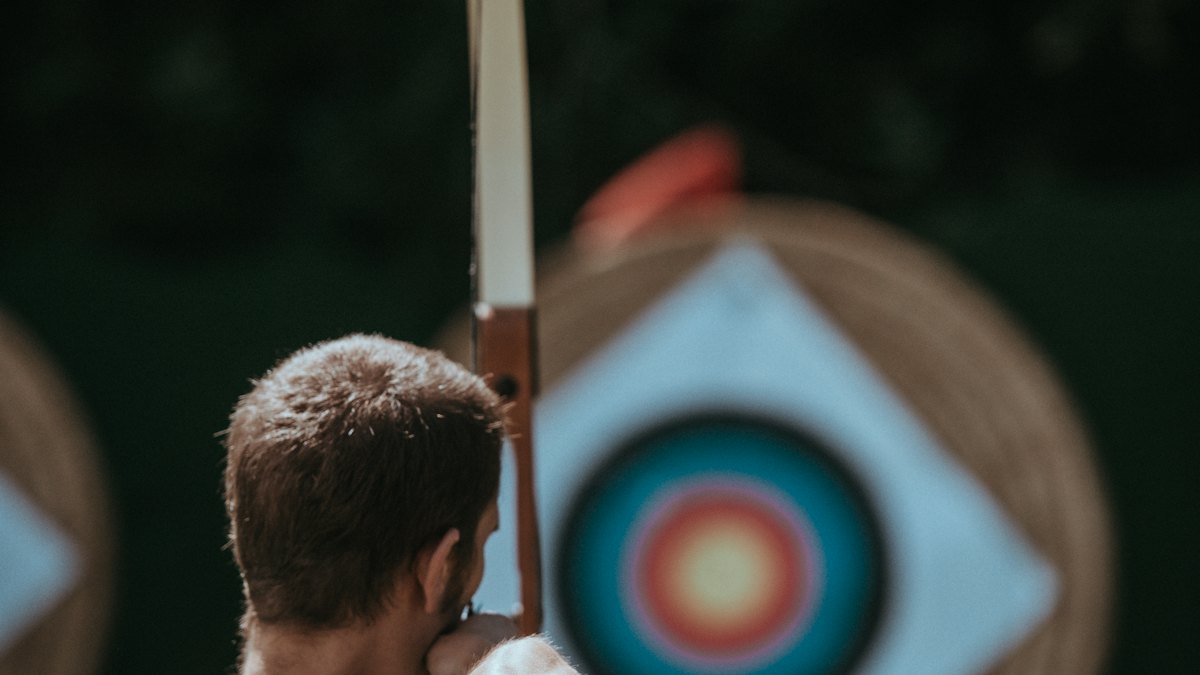
The classic traditional build — 600 spine arrows with feathers off a wooden shelf — is the configuration this whole ladder was originally calibrated around, and it deserves its own physics lesson. Feathers change two things at once. First, mass: a trimmed natural feather publishes ≈ 40–60% lighter than the same-length plastic vane (manufacturer-published nominal values), so the tail of the arrow carries less weight and the shaft acts marginally stiffer for the same spine. Second — and more important — drag: a feather’s rough surface catches air hard, and that drag straightens out a slightly weak arrow within the first few yards. A vane setup with the same marginal spine stays marginal much longer.
Combined with a finger release off the shelf, this is why traditional shooters get away with arrows one notch softer than a target rig would tolerate — and why the decision tree subtracts 2 lb for feather setups and shows a separate finger-release correction for traditional bows. The flip side: feathers demand care. They slump in rain, they need more brace-height clearance, and on the softest grades (1200–1400) their larger profile adds wind drift at anything past indoor distances.
💡 Traditional setup tip: on an off-the-shelf longbow, the arrow passes the riser with the deepest paradox of any configuration. If your trad build sits at the top of its band, the tree’s advice is to take the stiffer neighbor — and let the feathers’ drag forgiveness, not a soft spine, absorb the launch. A plunger-equipped target recurve, by contrast, runs true to the published band.
The Soft End of the Ladder: 800 Through 1400
Below 800 the market changes character: these are grades for light limbs, short draws, and indoor distances, sold in narrower channels and—below 1000—rarely stocked in general sporting-goods stores. Each grade below gets its band and its typical buyer, plus the one misbuy that grade attracts.
800 Spine Arrows: The 30–33 lb Barebow Entry Band
800 serves 30–33 lb finger-release recurves — the most common barebow entry weight, camp-progression bows, and adults with short 24–26″ draws. It is the first grade where buying discipline matters more than brand: soft-grade shafts are thin-walled, so inspect for cracks after any hard angle shot, and sort a new dozen by weight if your shop’s scale allows. A 800 on a 45 lb bow is not a “light hunting arrow” — it is a three-grade error that will fold visibly in flight.
900 Spine Arrows: 27–30 lb Light Recurve
The 900 grade covers 27–30 lb: older youth stepping up from starter bows, low-poundage traditional shooters with light tips, and 26″-class arrows on shared range equipment. It is the least-stocked number on the whole ladder — most local shops jump from 800 to 1000 — so plan to order online and verify the printed deflection on arrival. Expect shorter stock lengths (many 900 shafts come in 30″ raw blanks), which suits the shorter draws this grade serves anyway.
1000 Spine Arrows: 25–28 lb Kit Bows and Programs
1000 is the 25–28 lb grade and the workhorse of organized archery: school programs, scout camps, and package bows ship it because one 1000-spine shaft covers the widest slice of mixed drawer weights with a single inventory item. For individuals it is the correct grade for light takedown limbs and short-range barebow practice — and the ceiling of the ladder for most adults, since the 25 lb floor is already below common recreational draw weights.
PSE Razorback 1000 Spine Kit: Reading the Package Arrows
The PSE Razorback — a 62″ takedown recurve sold with 20, 25, and 30 lb limb options — is the bow most people encounter 1000 spine arrows alongside, because its ready-to-shoot (RTS) packages bundle arrows matched to the limb set. The bundled shafts are 1000-spine-class carbon, selected so that the kit flies acceptably across the bow’s limb range straight out of the box. Three things to know before judging them: package contents vary by retailer and production year, so check the current listing rather than old reviews; the bundled arrows are sized for average draws, so archers outside 26–29″ should re-match with the tree above; and the bundled arrows are a starting point, not a ceiling — upgrading to a properly matched dozen at your exact draw length is the single biggest flight-quality improvement a Razorback owner can make.
1200 Spine Arrows: Youth-Program Shafts, Not Upgrade Shafts
1200 serves 18–25 lb bows — youth-program arrows, camp bows for younger kids, and indoor 10–18 m shooting. These are built-around-forgiveness shafts: fat diameter, thick walls, and vanes sized to stabilize at short range, because their whole job is putting an arrow on a face 10 meters away for a nine-year-old. The misbuy this grade attracts is the adult at 30–35 lb who reads “1200” as a step up from 1000 and orders it for a full-size recurve.
❌ Don’t: don’t buy 1200 or 1400 spine arrows for an adult draw-weight bow, and don’t read the ladder bottom-up — lower numbers are stiffer, so 1200 is not “stronger than 1000,” it is several grades softer. On a 35 lb bow a 1200 will not tune into correctness with any point weight you can buy.
1400 Spine Arrows: The Indoor Short-Range Youth Grade
1400 is the bottom of the consumer ladder: under 18 lb starter bows, the smallest youth risers, and indoor short-range sets. At this grade the shaft is matched to bows that launch an arrow at modest speed over 5–10 m, and the build priorities are safety-light weight, blunt-friendly points, and high visibility fletching. Two practical notes: 1400 shafts are the most fragile on the ladder, so programs buy them in bulk and cull damaged ones aggressively; and they are useless one weight class up — a 25 lb camp bow needs a 1000, not a leftover 1400.
150 Spine Arrows: The Opposite End of the Scale
A brief clarification, because search results mix these up: 150 spine arrows deflect just 0.150″ in the standard test, which makes them an ultra-stiff grade — the opposite direction from this page’s soft 500–1400 ladder. They serve extreme-draw-weight compounds and specialized builds, not light recurves or youth bows. If you arrived here from a 150 listing, the grade you actually want is almost certainly on this page’s ladder; the stiff-end logic (300 and below) is explained in the 300 spine arrows guide.
20–40 lb Recurve: Grade-by-Grade Recommendation Table
The panorama in numbers: a 28″ arrow and 100 gr points at Mediterranean finger release, with the feather column showing how the natural-fletching allowance moves boundary bows one notch softer. If your draw weight is an estimate rather than a measurement, confirm it first — the Bow Draw Weight Calculator adjusts for age, build, and bow type.
| Draw weight | Grade (vanes) | Grade (feathers) | Typical shooter |
|---|---|---|---|
| 20 lb | 1200 | 1200 | Youth starter, 22–24″ draw |
| 25 lb | 1000 | 1000 | Older youth, camp programs |
| 30 lb | 800 | 800 | Barebow entry, light takedown |
| 35 lb | 600 | 700 | Light adult recurve, trad shooter |
| 40 lb | 500 | 600 | Adult light recurve, field archery |
28″ arrow, 100 gr points, Mediterranean finger release. Every row shifts ±1 grade with 2.5 lb of effective weight — re-run the tree for your exact length and tip.
Choosing Arrows for a Youth Bow: The Safety Floor
Youth arrows raise one question beyond spine matching, and it has a measured, boring answer. Most manufacturer charts and organized-range rules keep finished arrow weight at or above about 5 grains per pound of draw weight. For the bows on this page’s soft end the math is gentle: a 15 lb youth bow implies a ≈ 75-grain minimum finished arrow, and a 20 lb bow a ≈ 100-grain minimum — floors that essentially every stocked youth arrow clears, because a 1200- or 1400-spine shaft with its standard components already weighs well past those numbers at any normal youth length.
In practice, three checks cover the youth-buying decision. Spine: run the tree with the bow’s actual limb weight and the child’s measured draw — a hand-me-down bow at “about 20 lb” is how misgraded arrows happen. Length: keep arrow length at or slightly above draw length rather than trimming for speed; the 2.5 lb-per-inch rule means an over-short arrow also misgrades. Condition: soft-grade shafts have thinner walls, so a 10-second flex-and-spin check before each session is the whole maintenance routine. And for anything beyond this page’s scope — bow-specific limits, program rules, unusual builds — the bow manufacturer’s manual and the range’s rules are the authorities; treat this page as the flight-quality tool it is. The multi-brand fit table on the Arrow Spine Chart cross-checks any youth shaft brand against these bands.
Three Measured Conclusions That Break the Usual Assumptions
1. Draw weight is not the decision — effective weight is. One inch of arrow length moves the fit by ≈ 2.5 lb, clamped at ±6 lb. A 30 lb bow shooting 30″ arrows lands at the same 35 lb effective weight — and the same 600 grade — as a 37 lb bow shooting 26″ arrows. Buyers who match on draw weight alone misgrade roughly every second build with a non-average draw length.
2. Feathers move boundaries, not physics. The 2 lb feather allowance matters exactly once per purchase: when your effective weight sits within 2 lb of a band edge. The table above shows it live — at 35 lb the vane setup takes a 600 while the feather setup takes a 700; at 40 lb the same split repeats (500 vs 600). At mid-band weights the two columns agree, which is why the allowance isn’t a universal “add one grade for feathers” rule.
3. The soft half of the ladder is wider than the stiff half. The famous 250–500 grades span about 45 lb of draw weight across five numbers; this page’s 500–1400 span covers 10–50 lb across eight numbers. The bands are deliberately narrower here — at 20 lb of draw, a 2 lb error is a 10% mismatch, so the ladder subdivides — which is also why youth fitting fails more often than adult fitting when buyers reuse one “universal” arrow.
Frequently Asked Questions
500 spine arrows for what draw weight?Top Question▼
The core window is 40–50 lb on a finger-release recurve with a 28″ arrow and a 100 gr point. The 500 spine arrows draw weight window shifts with build details: a 45 lb bow at a 30″ draw still fits 500 (long arrows soften dynamic spine), while a 42 lb bow cut to 25″ drops into the 600 band. As a boundary rule, one inch of arrow length moves the fit by ≈ 2.5 lb of draw weight, and every 25 grains of point weight moves it by roughly half a grade. If your bow sits below 40 lb, the 600 grade above is the correct starting point, not a softer 500.
What is the real difference between 600 and 700 spine arrows?Top Question▼
One deflection step: a 600 shaft bends 0.600″ under the standard test weight, a 700 bends 0.700″, so the 700 is the softer arrow and covers a band roughly 5 lb lower — 32–35 lb versus 35–40 lb. On paper the split sits at about 35 lb, but arrow length and point weight decide borderline bows: a 33 lb bow with a 29″ draw and 125 gr points tunes like a 600, while the same bow with a 25″ arrow and 80 gr points tunes like a 700. Run both numbers through the decision tree above, and for scenario-level model picks read the 600/700 buying guide linked in the 600 section.
What bows actually use 800 spine arrows?Top Question▼
The 30–33 lb band: barebow entry recurves, school and camp bows, and adults with short 24–26″ draws on light limbs. An 800 also fits a 35 lb bow shot with a very short 23″ arrow and light 70–80 gr points, because a short, light-tipped arrow acts stiff for its weight. What an 800 never fits is a 45 lb hunting bow — that error comes from reading the number as a strength rating instead of a deflection, where lower means stiffer. Availability is thinner than 500/600, so buy from archery retailers rather than general marketplaces where mislabeled soft-grade shafts are common.
Who are 900 spine arrows for?▼
Shooters in the 27–30 lb band: older youth moving off starter bows, low-poundage traditional shooters with light 80–100 gr points, and 26″-class arrows on camp equipment. The 900 grade is one of the least-stocked numbers in local shops — most retailers jump from 800 to 1000 — so expect to order online and verify the printed deflection on the box. A 900 on a 40 lb recurve would be four grades too soft: the arrow would fold around the riser and fishtail visibly at 10 yards.
Are 1000 spine arrows only for kids? What about the PSE Razorback kit?▼
The 25–28 lb band they serve includes adults — light-limbed takedowns and barebow starters — not only children. They are the standard grade for package bows: the PSE Razorback ready-to-shoot kits bundle 1000-spine-class carbon arrows matched to the bow's 20–30 lb limb options (package contents vary by retailer and production year, so check the current listing). For school and camp programs, 1000 is the workhorse grade because it covers the widest slice of mixed drawer weights with one shaft.
Who should buy 1200 or 1400 spine arrows — and who shouldn't?▼
1200 serves 18–25 lb youth bows and indoor 10–18 m program shooting; 1400 serves the smallest starter bows under 18 lb and short-range indoor sets. Both are youth-cart and indoor grades. You shouldn't buy them for an adult recurve in the 30–50 lb range: a 1200 on a 35 lb bow is several grades too soft and will shoot unpredictably no matter how you tune it. The failure mode is silent — soft arrows often still hit the target face at 10 m, which convinces buyers the arrow was fine until they move to 20 m and watch the group fall apart.
How do I choose arrows for a youth bow safely?▼
Match the spine with the decision tree first, then check the weight floor: most manufacturer charts and range rules keep finished arrow weight at or above about 5 grains per pound of draw weight — for a 15 lb youth bow that is roughly a 75-grain minimum finished arrow, a floor nearly every stock youth arrow clears. Keep the arrow length at or slightly above the draw length rather than trimming aggressively, inspect shafts for cracks before each session, and follow the bow manufacturer's manual for any bow-specific limits. Spine and weight matching is a flight-quality decision; the manufacturer's manual is the authority on what the bow itself accepts.
Feathers or vanes on the soft 500–1000 grades?▼
Feathers are the traditional default and the more forgiving choice on soft grades. They publish ≈ 40–60% lighter than same-length vanes, and their high drag stabilizes a slightly weak arrow within the first few yards of flight — which is exactly the failure mode soft grades risk. Vanes add tail weight and fly with less drag, so a marginal arrow stays marginal longer; on the 500–700 grades, a vane setup caught between two bands should take the stiffer one. The trade is weather: feathers slump in rain, vanes do not. The tree above already applies a ≈ 2 lb feather allowance at band boundaries.
Can I just buy the grade my friend shoots on the same poundage?▼
Only if the arrow builds also match. A 30 lb bow with a 28″ arrow and 100 gr points is an 800, but the same bow with a 31″ draw and 150 gr points is a 700, and with a 24″ arrow and 70 gr points it is a 900–1000. Draw length, arrow length, and point weight move the answer by up to two grades at the same draw weight — which is why this page asks for all four inputs instead of one. Copy your friend's draw weight, not their arrow.
How accurate is the decision tree compared to a paper tune?▼
The tree is a calibrated starting point — it uses the same band logic manufacturers publish, plus explicit corrections for length, fletching, and release style, so it lands within one grade for the large majority of standard builds. It cannot see bow-specific factors: a riser cut past center, an unusually stiff plunger tension, or a nonstandard point weight. The professional habit costs one shaft: buy a single uncut shaft in the recommended grade, paper-tune it at your draw length, and step one grade up or down based on the tear direction before ordering the dozen. The spine tester guide linked in the 500 section shows the bare-shaft version of that test.
From Grade to Purchase in Four Steps
The whole page compresses into four moves. One: measure draw weight and draw length — not guess, measure. Two: run the decision tree at the top of this page with your bow type, length, and fletching, and read the finger-release correction it prints for your setup. Three: buy one uncut shaft in the recommended grade and confirm with a bare-shaft or paper test before ordering the dozen. Four: re-run the tree whenever any build input changes — a new point weight, a re-fletch from feathers to vanes, or two inches of growth on a young archer each move the answer. For full bow-energy math beyond the spine match, the homepage arrow calculator picks up where the grade leaves off.
This page is the grade-decision layer of the site’s light-shaft coverage: it tells you which number to buy across the whole 500–1400 ladder. The model-decision layer lives on the sister pages — the 500 spine model guide for the 40–50 lb grade and the 600/700 spine buying guide for the crossover grades — and both link back here for the fitting step.
Related Arrow Tools & Guides
Arrow Spine Chart
Free 2026 arrow spine chart and interactive calculator. Inst...
Arrow Kinetic Energy Calculator
Arrow kinetic energy calculator: enter arrow weight and spee...
Bow Draw Length Calculator
Bow draw length calculator: enter wingspan to get draw lengt...
Arrow Spine Calculator
Arrow spine calculator: enter bow type, draw weight, draw le...
Arrow FOC Calculator
Arrow FOC calculator: enter arrow length and component weigh...
Arrow Weight Calculator
Arrow weight calculator: pick shaft GPI, cut length, point, ...
Arrow Trajectory Calculator
Arrow trajectory calculator: enter arrow speed, weight, dist...
Bow Draw Weight Calculator
Bow draw weight calculator by age, build, experience and gam...
Crossbow Ballistic Calculator
Crossbow ballistic calculator: bolt speed, drop and kinetic ...
Compound Bow Arrow Chart
Official compound bow arrow spine chart. Quickly match arrow...
Easton Arrow Selector
Free 2026 Easton arrow selector and shaft spine calculator. ...
Gold Tip Arrow Calculator
Calculate your exact Gold Tip arrow spine size or view the o...
400 Spine Arrows
400 spine arrows: fit windows for 45-60 lb compound and 40-5...
Brand Spine Chart Decode
Decode spine charts for Blackout, Bloodsport, Beman, Sirius,...
Wood Arrow Spine Calculator
Wood arrow spine calculator: pick bow type, draw weight, arr...
Aluminum Arrow Spine Chart
Aluminum arrow spine chart: decode 4-digit codes (1716–2317)...