600 & 700 Spine Arrows: Light Bows, Youth & Barebow
Light bows are where spine shopping gets confusing: the charts that serve 60–70 lb compounds thin out, e-commerce listings multiply, and the 600 and 700 grades sit at the crossroads of barebow entry rigs, 35–45 lb light compounds, traditional feathered setups, and nearly every youth bow worth buying arrows for. This guide maps the two grades to five concrete buying scenarios and decodes the 600-vs-700 line — and when you want every grade on one ladder, the 500 Spine decision-tree page holds the full 500→1400 tool.
Five Buying Scenarios: Match the Grade to the Archer
Grade charts tell you what a shaft bends; they don't tell you what to buy at the counter. Each scenario card below pairs a real bow-and-archer combination with the grade that actually fits it, the pain that shows up when the fit is wrong, a concrete setup, and the result you should expect once the arrows are matched. Use the filters to jump to your bow type, then follow each card's next step.
Barebow Entry — 30–35 lb Recurve, Gap & Instinctive Aiming
Light recurve, finger release, no sight
Pain point: Club-house 500s and 600s borrowed off the rack feel fine on blank bale, then tear tail-left at 20 yards. The archer blames form while the shaft is a full grade too stiff for a light finger bow.
Setup: 700 carbon cut ≈1″ past the arrow rest, 100–125 gr point, 3-fletch real feathers, shot off the shelf or a low rest.
Expected result: Clean paradox around a light riser, a wider tune window for gap shooters, and a quieter launch — the classic 700 spine arrows recipe for finger bows.
Light Compound — 35–45 lb, Women & Progressing Youth
Short-draw compound, wrist release or fingers
Pain point: The same bow calls for a different grade depending on the release. Buyers copy a friend's arrow, inherit the wrong grade for their draw length, and chase a tune that was never there.
Setup: 600 spine carbon arrows at 26–28″ cuts with 100 gr points under a release aid; step to 700 if you shoot the same bow with fingers.
Expected result: Field points and broadheads landing together by 30 yards, with flat enough trajectory for short-draw setups to keep two pins honest.
Traditional Feathered — 600 Spine Arrows with Feathers
35–40 lb recurve or longbow, heavy heads
Pain point: Buying 700 “because the bow is light”, then gluing on a 175 gr broadhead: front mass swings the dynamic spine a full grade weak, the shaft flexes violently, and the arrow slaps the riser.
Setup: 600 shaft cut to 28–29″, 125–175 gr head, true right-wing feathers, tuned bare-shaft first at 20 yards before the full dozen is fletched.
Expected result: Heavy-forward traditional flight where fletched arrows group with bare shafts — the payoff that makes 600 spine arrows with feathers the default trad buy.
Youth Bows — 15–25 lb, First Real Set
Youth recurve or beginner compound, short draw
Pain point: Hand-me-down 500s or 400s on a 20 lb bow flex less than the bow can push: arrows plane, wander in the lightest breeze, and quietly convince young shooters that they “can’t aim”.
Setup: Match the pair of draw weight and draw length to the ladder: 25 lb and up reaches 700, 20–25 lb wants 800, 15–20 lb wants 900. Buy durable carbon, cut once.
Expected result: Arrows that recover from flex and fly straight off lightweight limbs — confidence compounds from the very first quiver instead of eroding.
Indoor Short Range & Class Bows
10–20 lb program bows, fixed short distance
Pain point: Program bows ship with ultra-soft arrows for a reason; the two classic mis-buys are adults shooting kit numbers on a 30 lb bow, and beginners buying adult 600s for a 15 lb class bow.
Setup: Keep program arrows with program bows. Upgrade the arrow only when the bow's actual pull moves — re-measure, don't inherit.
Expected result: Every arrow in the bag matches the bow that actually shoots it, which is the whole game at indoor short range.
600 vs 700 — Where the Line Falls
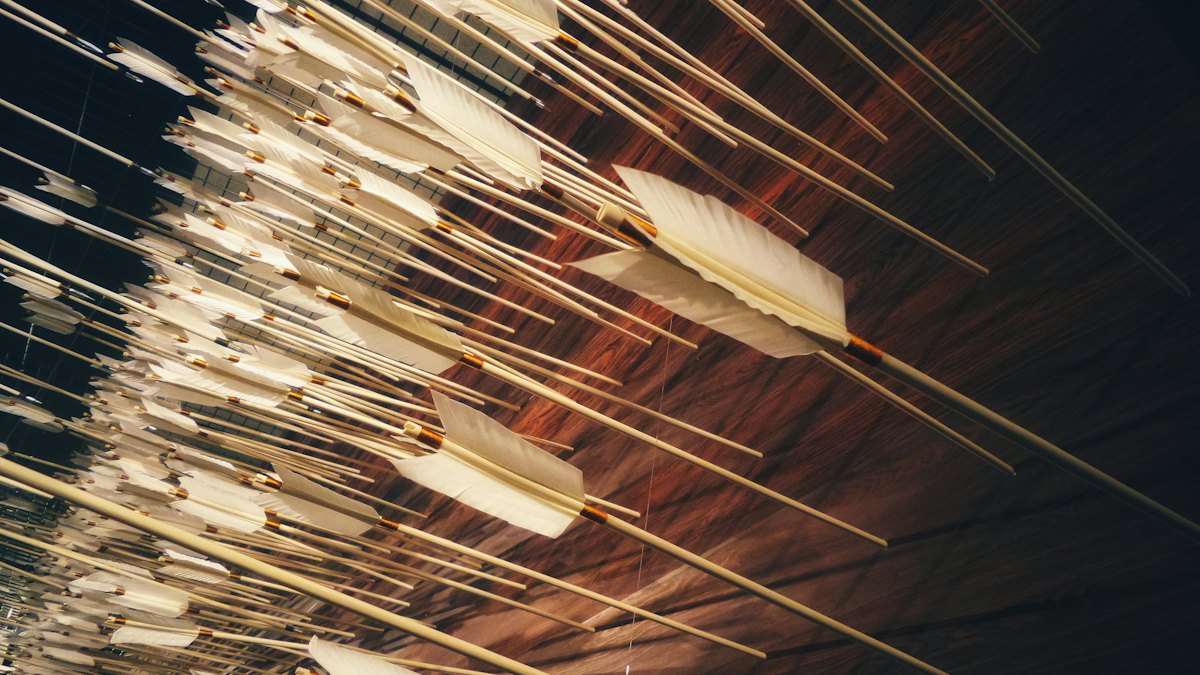
Spine numbers are deflection readings, not marketing tiers. A 600 shaft bends 0.600 inches under the standard test — a 1.94 lb weight hung mid-shaft across a 26-inch span — and a 700 bends 0.700 inches under the same load. Bigger number, weaker arrow. That makes the two grades exactly one full grade apart, with no intermediate label between them on most manufacturer ladders: Easton, Gold Tip and the catalog brands jump straight from 600 to 700 to 800. The 0.100-inch deflection gap is the same distance as 400 → 500 or 500 → 600, so treat it as a real grade change, not a trim.
You can close part of that gap with hardware, but only part. Point weight swings dynamic spine by roughly half a grade per 50 grains, and cutting length stiffens the shaft too, so a 700 with a 125 gr point and a one-inch-shorter cut lands measurably closer to the 600 than its label suggests. What you cannot do is split the difference with half measures and call the grades interchangeable — they are not. Where the line falls in practice: 600 serves 35–45 lb recurves at 27–29-inch draws, 40–45 lb light compounds at short-to-medium cuts with light points, and traditional bows in the same poundage band running heavy 125–175 gr heads. 700 serves 30–35 lb recurves and barebow rigs at 26–28 inches, 35–40 lb trad bows with light points, and the top of the youth ladder. If your bow sits between bands, buy the softer label for finger shooting and the stiffer one for release — finger release bends the arrow harder at launch, release aids don't.
⚠️ Label drift is real: a “600” from one brand and a “600” from another can measure 0.580–0.620″ on a spine tester, and catalog arrows drift further still. When you mix brands in one quiver — or buy a 600 of one make to sit beside a 700 of another — match measured deflection instead of printed labels before you blame the bow.
The 600 Grade: 600 Spine Arrows by Draw Weight and Shaft Choice
The 600 grade is the stiff end of the light-bow world and the soft end of the serious one. In carbon it typically runs 6.5–8.5 grains per inch (manufacturer-published nominal figures — verify the current spec sheet), so 600 spine arrow shafts cut to 28 inches finish near 290–340 grains with a 100 gr head, insert and nock included. That is the 7–9 grains-per-pound window light bows like: heavy enough to steer, light enough that a 35 lb bow still launches it crisply. Most 600s come 31–32 inches raw, which leaves real cutting room for short-draw youth and women's setups — one reason 600 spine carbon arrows are the default first “real” dozen for 40 lb-class archers.
Who actually shoots the grade? Three overlapping groups: 35–45 lb compound shooters at 26–28-inch draws with a release, 35–40 lb recurve shooters at 28–29 inches with standard points, and traditional archers in the same band who screw on 125–175 gr heads and need the extra stiffness to carry them. Search results for “carbon arrows 600 spine” blend all three audiences into one shelf, which is why the fit bands below matter more than the listing title. One caution for the top of the band: 45 lb-plus shooters at 29-inch draws are already crossing into stiffer territory — the 400 spine guide and the 500 spine guide pick up where this page ends.
600 Spine Arrows Draw Weight: The Bands That Matter
The honest way to read 600 spine arrows draw weight charts is as a pair of numbers: pull and draw length. Standard fits land like this — 35–40 lb recurve at 28–29″ with a 100–125 gr point; 40–45 lb compound at 26–28″ with a release and a 100 gr point; 30–35 lb recurve at 29–30″ or with a 150 gr head, where the long draw or heavy front weakens the arrow a full grade and pulls the fit down from 700 to 600. Two checks before you order: confirm what the bow really pulls at your draw (limb-bolt stickers and peak-weight claims drift — a bow scale or the bow draw weight calculator settles it in a minute), and remember that finger release wants the softer side of any band while a release aid wants the stiffer side.
Shopping 600 Spine Arrows for Sale Listings Without Guessing
Search “600 spine arrows for sale” and you get three different products wearing one label. Fletched 6- or 12-packs arrive ready to shoot — convenient, but you inherit the factory's cut length and vane choice. Raw 600 spine carbon arrow shafts ship uncut with inserts and nocks separate, which is what bare-shaft tuners and trad shooters should buy. Component bundles add points and a fletching jig for turnkey builds. Whatever the format, four lines decide quality: straightness tolerance (±0.006″ is fine for light bows; ±0.003″ is a bonus), spine tolerance (±2–3 on a 600 is normal), raw length (31″+ leaves cut room), and whether the listing states GPI at all — a 600 with no published weight spec is a listing to skip.
Gold Tip Valiant and Traditions: The 600-Class Workhorses
Within Gold Tip's ladder, two manufacturer-published nominal 600 options cover most light-bow buyers. The Valiant 600 is the value-dozen play: the same durability-first construction philosophy as the Hunter line at a friendlier price, with GT-series components readily available — a sensible first dozen for a 40 lb-class compound. The Traditions 600 is the trad-focused taper, built around the heavier 125–175 gr points that traditional setups run, which makes it the natural pick for the feathered-600 scenario above. Treat both as spec-sheet entries: Gold Tip refreshes its lines regularly, so confirm the current published GPI and straightness for the production year before ordering.
Easton Jazz and Avance: Beginner-Price 600s That Measure Honestly
Easton serves this poundage band under two naming systems, and knowing which one you are reading saves a wrong order. The Avance carbon line lists a 600 (and a 700) in its target-oriented sizes — a clean, spec-sheet-quoted choice for barebow and entry target shooters who want a 600 spine arrow shaft that behaves like its label. The aluminum Jazz covers the same beginner band under Easton's four-digit diameter-and-wall codes rather than the word “spine”; match it by Easton's own fit chart, not by converting numbers in your head. Both lines are club favorites for a reason: predictable, honest measurements at prices that make losing arrows to grass survivable.
Skylon, Musen and Catalog-Brand 600s: Reading E-Commerce Listings
The marketplace brands — Skylon in the enthusiast-catalog tier, Musen and similar storefronts in the budget tier — list 600 spine carbon arrows in 6- and 12-packs, often pre-fletched with vanes or feathers. The honest assessment: for a light bow at indoor-to-20-yard distances, a budget 600 that spin-tests straight shoots well, and the price makes practice volume easy. The risk concentrates in consistency — expect some shafts in a budget dozen to drift toward the tolerance limits, so spin-test and weigh-sort before tuning, and keep expectations appropriate for the price. They are fine practice shafts; they are not where you buy one dozen you plan to keep for years.
The 700 Grade: 700 Spine Arrows by Draw Weight and Shaft Choice
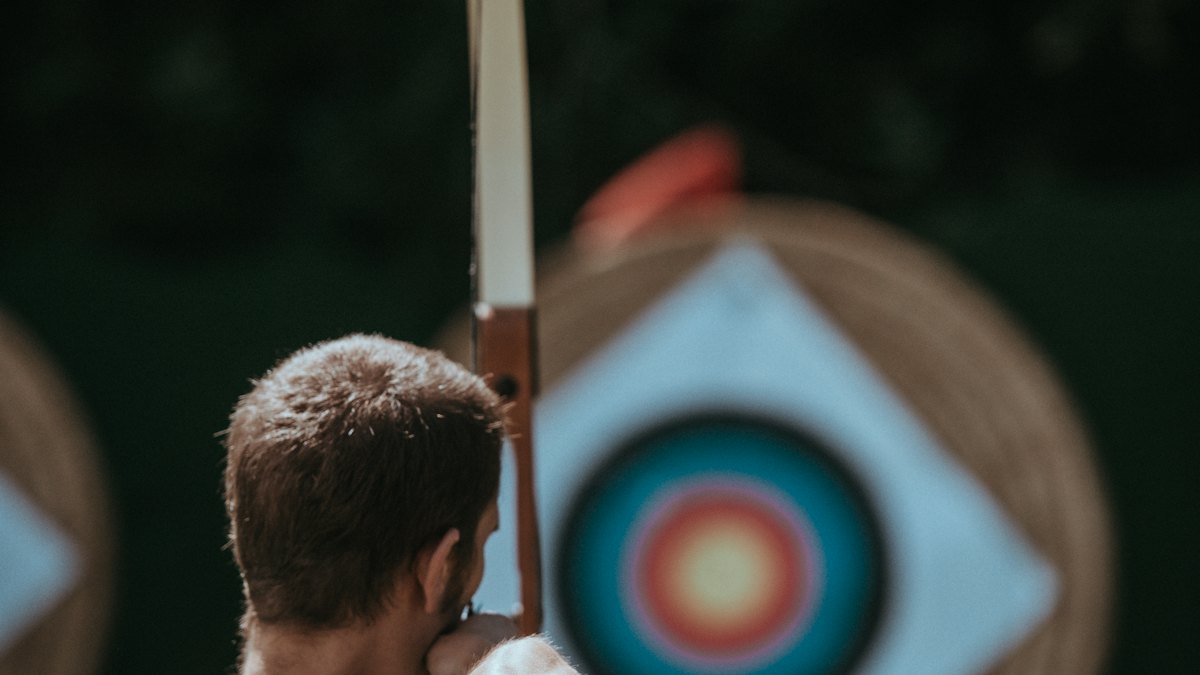
If 600 is the stiff end of the light-bow world, 700 is its heart — the grade that 30-something-pound recurves and barebow rigs were practically designed around. 700 spine carbon arrows typically run 6.0–7.5 grains per inch (manufacturer-published nominal), so 700 spine arrow shafts cut to 27–28 inches finish near 250–300 grains with components — light, quick arrows that a 30 lb bow can still launch with authority. The grade's whole personality comes from that pairing: softer shaft, slower bow, forgiving launch. It is also the first rung where feathers beat vanes for most shooters, because finger launch and shelf contact punish stiff-recovering arrows and reward compressible fletching.
The grade is equally the youth crossover: a strong 12- to 14-year-old moving up from a kit bow into a 25–30 lb recurve lands here before reaching the 600s, and adult beginners in the same band stay for years. Model-wise, the same families as the 600 grade repeat one rung softer — Valiant and Avance both list 700s, and the catalog brands fill the budget tier — so once you have picked a shaft family at 600, staying in it at 700 keeps components and cutting jigs consistent between bows in the household.
700 Spine Arrows Draw Weight: Where the Band Sits
The 700 spine arrows draw weight band, read plainly: 30–35 lb recurve at 26–28″ with a 100 gr point is the textbook fit; 25–30 lb youth bows at 25–27″ take the 700 at the stiffer edge of their range or drop to 800 at shorter draws; 35 lb with a 125 gr+ point, or anything at 29 inches and beyond, pushes the fit back up to 600. Release shooting moves every one of those lines stiffer by about half a grade, which is why a 40 lb compound with a wrist release can shoot 700 comfortably at short draws while the same bow finger-shot wants the 600. When the band edges feel ambiguous, the arrow spine chart lays the full draw-weight grid side by side.
💡 Barebow shortcut: if your rig is “30–35 lb recurve, fingers, feathers, gap aiming”, buy 700 and stop researching — that combination is the grade's design case. Spend the saved effort on bare-shaft tuning at 20 yards instead; it moves groups more than any shaft swap. For the full math on your exact numbers, the spine calculator at the top of the homepage takes a minute.
Feathered 600s for Traditional Shooting
The search phrase “600 spine arrows with feathers” describes a complete traditional system, not an accessory choice. Here is why the pieces belong together. A 35–40 lb trad bow launches arrows slowly — 170–190 fps-class — and off a shelf or low rest, with a finger release that kicks the shaft sideways at launch. Feathers answer all three constraints at once: they compress against the shelf instead of kicking the arrow, they steer the big blunt-paradox recovery of a heavy-headed shaft, and they stabilize the broadhead-like front weight that traditional setups run. That is why the canonical trad build is 600 spine, 125–175 gr head, 3-inch right-wing feathers, helical clip — the head carries the front weight for wind and penetration feel, the 600 stiffness carries the head, and the feathers carry the recovery.
The working method is bare-shaft first. Buy raw shafts, screw on your real head weight, shoot fletched against bare at 20 yards, and adjust point weight or cut length until the bare shafts plane into the fletched group — then fletch the dozen. Wet-weather shooters have a legitimate counterargument: feathers degrade in rain, and a soaked feathered arrow flies poorly for the rest of the session. Traditional shooters in wet climates either keep feathered arrows for fair weather and accept the trade, or shoot short low-profile vanes and give up some launch forgiveness. There is no option that gets both — pick which compromise your range days favor.
❌ Don't buy pre-fletched 600s for a trad bow: factory trad packs usually ship with 100 gr points — the wrong front weight for a 35–40 lb bow that will end up at 125–175 gr. You would tune a set of arrows around points you are about to replace. Order bare shafts, tune bare, then fletch; and deflection-match any mixed-brand dozens with the spine tester workflow.
Youth Arrow Spine: The 700–900 Ladder, Table Included
Youth arrow spine is where mis-buys concentrate, for a simple reason: adult arrows are everywhere, and youth-rated arrows are not. The physics is unforgiving in the stiff direction — a 15–25 lb bow cannot bend a 500 or 600 enough to recover cleanly, so those shafts plane like little wings, drift in the mildest breeze, and group like a shotgun. The rule worth printing on the fridge: nothing stiffer than 600 (that is, no number below 600) belongs on a youth bow, and most youth bows want the numbers at or above 700. Here is the table that matches bow pull and draw length to a grade:
| Bow pull | Typical draw length | Grade to buy | Why |
|---|---|---|---|
| 25–30 lb | 25–27″ | 700 | Top youth rung — joins the adult barebow band at 30–35 lb |
| 20–25 lb | 24–26″ | 800 | Program favorite; soft enough to flex at short draws |
| 15–20 lb | 22–24″ | 900 | Light recurve kits and first competition bows |
| Under 15 lb | 20–22″ | 1000–1400 | Kit arrows only — indoor short range, not an upgrade path |
Two practical notes for parents. First, draw length moves the numbers more than poundage does at this scale: a 25 lb bow at a 24-inch draw is a different arrow problem than the same bow at 27 inches, which is why the table pairs both columns. Second, buy the bow-and-arrow set as one decision — if the kit bow ships with matched arrows, keep the pairing until the archer outgrows the poundage, then re-buy both ends of the system together. And when a junior archer progresses past 35 lb, this page has done its job: the barebow and light-compound scenarios at the top take over, and the full ladder on the 500 Spine decision-tree page maps everything stiffer.
❌ The hand-me-down trap: adult 500s and 400s are the most common “free upgrade” handed to young shooters, and the worst one. On a 15–25 lb bow they flex less than the bow can push, plane off line, and read as “I can't shoot” to a kid who is actually fighting equipment. Match the table, cut once, and let the arrows disappear into the target instead of the confidence.
Frequently Asked Questions
What bows actually use 800 spine arrows?Soft-Grade Check▼
800 spine arrows fit the band one step softer than this page: roughly 25–32 lb recurves at 25–28-inch draws, 30 lb traditional bows running 125–150 grain heads, and many youth-program bows in the 20–25 lb range. They are also the grade most often mis-bought by 35 lb+ adult shooters who assume “a higher number must be better for beginners” — on a 35 lb recurve an 800 is a full grade too soft and will fishtail out of the bow. The complete ladder from 500 to 1400, with every draw-weight band mapped, lives on the root 500 Spine decision-tree page.
Open the 500→1400 decision treeAre 800 spine carbon arrows different from 800s in aluminum or wood charts?Soft-Grade Check▼
The number means the same deflection everywhere — 0.800 inches under the standard 26-inch, 1.94 lb test — but the naming systems around it differ. Catalog brands sell 800 spine carbon arrows in 6- and 12-packs pre-fletched; aluminum lines use four-digit diameter-and-wall codes that only roughly parallel the spine ladder; wood arrows are matched by taper and foot weight instead. When you mix any of them, match measured deflection rather than printed labels, and spin-test budget carbons before tuning. The brand-by-brand cross-reference sits on the 500 Spine page.
See the brand cross-referenceWho buys 900 spine arrows — and are 900 spine carbon arrows legit?Soft-Grade Check▼
900 spine arrows are real and useful: 20–28 lb light recurves, 15–20 lb youth bows at 22–24-inch draws, and indoor class or program bows shooting short fixed distances. E-commerce 900 spine carbon arrows come in inexpensive 12-packs that are perfectly serviceable for that job, because light bows forgive a lot. What they are not is an upgrade path: on an adult 30 lb+ bow a 900 is two grades too soft, launches like a noodle, and robs all clearance. If your pull is 30–45 lb, the 600 and 700 grades on this page are your neighborhood.
Check where 900 sits on the ladderAre 1200 and 1400 spine arrows real — or a listing typo?▼
Real, but niche: 1200 spine arrows and 1400 spine arrows are youth-kit and indoor short-range grades built for 10–18 lb program bows at 10–15 meters. Kit bows ship with matching arrows for a reason — the numbers only make sense together. The classic mis-buy is an adult beginner seeing “1400, super forgiving” and pairing it with a 30 lb bow: the shaft cannot recover from flex, wallows downrange, and strikes the riser on marginally tuned setups. Buy these ratings only for the kit bows they were made for, and treat 500–1400 as one continuous ladder on the root page.
Walk the full grade ladderIs a 600 spine arrow enough for a 35 lb recurve?▼
Usually not the first pick. A 35 lb recurve at a 28-inch draw with a 100–125 grain point is textbook 700 territory; the 600 grade becomes right when something weakens the dynamic spine — a 29–30-inch draw, a 150+ grain head, or a bow turned up on the warm side of its limb-bolt range. If you shoot 35 lb with fingers at 28 inches and light points, buy 700 and keep 600 in mind for when you add point weight. One uncut test shaft of each grade with your real head costs less than a mis-bought dozen.
Run the spine tester workflowWill 700 spine arrows be too weak for my bow?▼
Weak-side symptoms are unmistakable: fishtailing downrange, arrows that refuse to group with bare shafts, and contact noise at the rest. 700 is too weak once you exceed its band — roughly 35 lb at 28 inches with a 125+ grain point, or anything over 40 lb at normal draws. It is exactly right for 30–35 lb finger bows at 26–28 inches with 100 grain points, which describes most barebow entry rigs. If your bow is 45 lb or more with a 29-inch draw, you are already in 500/400 country and this page is behind you.
Read the 400 spine guideHow do I choose my child's first real set of arrows?▼
Measure, don't guess: draw length first, because younger archers pull 22–25 inches rather than the adult 28, then the poundage the bow actually pulls at that draw. Match the pair to the youth table above — most 20–25 lb youth bows want 800 or 900, and only 25 lb and up at longer draws reaches 700. Buy durable carbon in a 6-pack, cut once to length with an inch of grow room, and keep spare nocks. Resist hand-me-down adult arrows: a 500 or 600 on a 20 lb bow flies like a bent broom handle.
Match the rung on the full ladderDoes a barebow setup need feathers?▼
Not mandatory, but they earn their keep. Feathers compress on launch and on shelf contact, which widens the tune window on finger-shot bows — the reason 700 spine arrows with feathers are the default barebow recipe. They also steer better at the low speeds light bows produce. The trade is weather: feathers get ruined in rain and add a whisper of noise. Vanes make sense only for release-shot compounds or shooters with covered storage who never train wet. Start with 3-inch right-wing feathers and change only if tuning proves a reason.
Can point weight turn a 700 into a 600?▼
Partially. Point mass weakens dynamic spine by roughly half a grade per 50 grains, so a 700 wearing a 150 grain head behaves closer to a 600 — and a 600 with a 75 grain point stiffens toward 700. But that is a trim, not a conversion: you are trading head weight, and therefore front-of-center balance, to move the needle. Traditional shooters who want heavy heads should simply buy the 600 in the first place. Treat point-weight changes as the final half-grade of tuning after the label is right, and verify with paper or bare shafts — not the spec sheet.
Related Guides & Tools
01400 Spine Arrows
400 spine arrows: fit windows for 45-60 lb compound and 40-55 lb recurve, when a 60 or 70 ...
02500-1400 Spine Arrows
500 to 1400 spine arrows by draw weight: 500 spine for 40-50 lb recurve, 600-900 for youth...
03Brand Spine Chart Decode
Decode spine charts for Blackout, Bloodsport, Beman, Sirius, Skylon and more: brand number...
04400 Spine Arrows: The 55-65 lb Standard
Model-matrix buyer's guide to the 400 grade: Easton Axis, 6.5 and 5.0, Gold Tip Hunter, Ca...
05500 Spine Arrows: Recurve, Traditional & Light Compound
Step-by-step 500 spine buying guide: fit-window derivation for 40-50 lb recurve and light ...