High FOC Arrows: Build, Tune & Penetration
Six field-tested ways to push an arrow past Dr. Ashby's 15% FOC threshold — brass inserts, outserts, collars, heavy heads, rear-weight trims, and crossbow bolts — each with its FOC gain, spine cost, and flight-risk rating. No formulas here: the FOC math lives on the FOC calculator.
Heavy Point / Broadhead Swap
Swap a 100-gr head for 150–200 grains. Fastest lever, but each +50 gr weakens dynamic spine — retune after every change.
Brass / Stainless Insert Build
Replace the stock 15–25 gr aluminum insert with a 50–100 gr brass or stainless insert. The standard high-FOC move on carbon shafts.
Outsert System Build
A steel outsert carries 200–300 gr ahead of the shaft. Extreme front weight for 650+ grain builds — spine must be re-selected from scratch.
FOC Collar (Rear-Weight Offset)
A weighted collar slid toward the point adds front mass without touching threads — the cleanest way to add FOC to a Deep Six arrow.
Rear-Weight Reduction
Lighter nocks and short 2″ vanes instead of 4″ feathers push the balance point forward. Free FOC, but stability drops on wide-cut heads.
Crossbow High-FOC Build
20–22″ bolts concentrate front weight dramatically — a 100 gr insert on a 20″ bolt jumps FOC far more than on a 30″ arrow. Tune to 18–20%, not 25%.
Why Chase High FOC? The Ashby Penetration Findings

FOC — front of center — is the percentage of an arrow's balance point that sits ahead of its geometric center. A “normal” hunting arrow leaves the factory near 10–13% FOC. Dr. Ed Ashby's long-running penetration studies, conducted on test media and hundreds of harvested animals, landed on a finding that changed arrow building: once FOC climbs past roughly 15%, arrows stop deflecting on bone and start driving through it. The heavy nose resists the shaft-bending moment that a rib or scapula creates, so the arrow keeps its line instead of skating off. His extreme test builds — 25–30% FOC, 650 to 900 grains total, single-bevel broadheads — produced the deepest recorded test-media penetration.
The second half of the story is the partnership between FOC and momentum. Momentum is total arrow mass times speed — it is the “freight train” quantity that carries the arrow into the target. FOC decides what that mass does after contact: a light arrow with extreme FOC still lacks the freight to punch through a bull elk's far rib, and a heavy arrow at 10% FOC gives away performance the moment it hits bone. The pairing that wins on heavy game is both: 400+ grains for whitetail, 450–550+ for elk, with 15–22% FOC built into the front half.
💡 Practical takeaway: build heavy first, then balance forward. Move total mass to your game-class floor with shaft GPI, then shift FOC to 15–20% with front-end weight. Compute both numbers on the Arrow FOC Calculator and Arrow Weight Calculator before buying a single insert.
FOC Targets by Game: Whitetail, Elk, Bear & Small Game
Pick the window before you pick the parts — the species you hunt sets the FOC target, and the target sets the spine. The bars show the middle of each window relative to a 30% scale.
Small game / stumps
12–15% FOCPenetration is not the goal — a moderate 12–15% keeps flight forgiving on 3D stumps and rabbit loads.
Whitetail deer
15–18% FOCDr. Ashby's threshold work puts the shoulder/rib bone breakage benefit just past 15%; 15–18% covers every North American broadhead tune.
Elk / moose / bear
18–22% FOCHeavy-bone game rewards 18–22%: more shaft ahead of the fletching driving through scapula and heavy rib.
Extreme FOC builds
22–30% FOCAshby's extreme test builds ran 25–30% FOC. Rewarding in test media, but every point past 22% narrows your broadhead-tune window and amplifies wind planning.
High FOC Build Steps: Inserts, Outserts, Collars & Heavy Heads
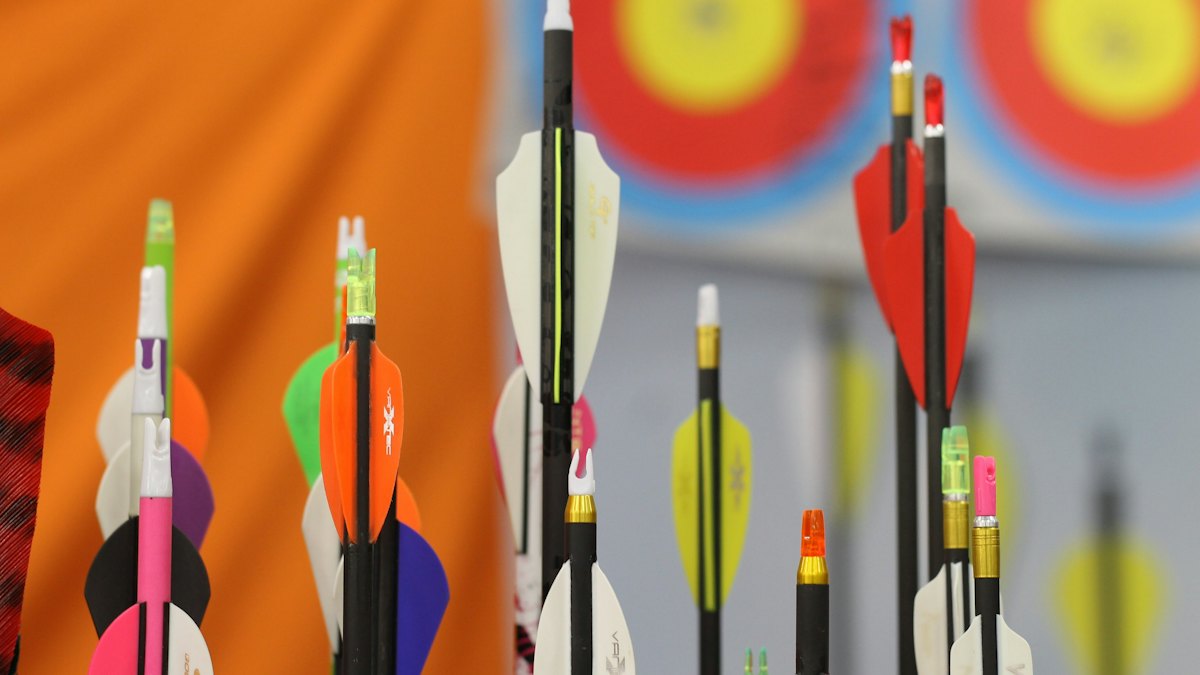
Every scenario card above is a different way to move the balance point forward. Build them in cost order: a heavy broadhead first (it is reversible), then a brass insert (semi-permanent, epoxy-set), then a collar or outsert when the first two are not enough. Two rules hold across all six cards. First, add front weight before you tune — paper-tuning before the final head weight is installed wastes a tuning session. Second, measure FOC after every step: a kitchen scale, a knife edge, and the balance-point method from the FOC calculation guide take two minutes per arrow.
⚠️ Epoxy warning: set inserts with a slow-cure (24-hour) epoxy and scuff the bore with fine sandpaper first. Hot-melt glue softens in a truck cab at 140 °F and lets a 75-grain brass insert walk forward mid-hunt — the classic “arrow suddenly 4% more front-heavy and won't group” failure.
❌ Don't stack every lever at once: a 200-grain outsert plus a collar plus 2″ vanes on an unmodified 400-spine shaft produces a build that planes sideways past 30 yards. Change one variable, re-measure FOC, paper-tune, then move to the next lever.
Complete 500-Grain High-FOC Hunting Arrow Recipe
A complete, order-ready parts list for an 18–20% FOC elk-class arrow on a 65–75 lb compound. The 9.5–10.5 GPI heavy-hunting shaft class (300 spine) supplies the mass; the brass insert and single-bevel 150-grain head push the balance point to roughly 18–19% FOC. Copy the card and take it to the shop.
| Component | Spec | Mass |
|---|---|---|
| Shaft | Carbon, 29″ cut, 9.5–10.5 GPI (e.g. 300-spine heavy hunting class) | 280–310 gr |
| Insert | 50–75 gr brass or stainless | 50–75 gr |
| Broadhead | 125–150 gr fixed-blade (single bevel for Ashby-style builds) | 125–150 gr |
| Collar (optional) | 25 gr steel collar behind insert | 25 gr |
| Vanes | 3 × 2″ low-profile (≈ 6 gr each) | 18 gr |
| Nock | Standard pin nock | 10 gr |
| Wrap | 4″ arrow wrap (optional) | 8 gr |
| Finished arrow | ≈ 13–14% shaft mass ahead of center → FOC 18–20% | 500–520 gr |
Spine note: with 175–225 grains up front, this build runs one full grade stiffer than the same bow with a 100-grain head — a 70-lb bow that shot 400 spine stock usually wants 300 spine here. Verify the pairing on the Arrow Spine Calculator and cross-check adjacent grades on the Arrow Spine Comparison page.
High FOC Weakens Dynamic Spine: The FOC–Spine Retune Table
The single most common high-FOC failure is not flight wobble — it is ignoring spine. Every grain ahead of the shaft's center makes the shaft flex harder at launch, so the same 340-spine arrow that shot bullet holes at 100 grains sprays tail-right tears at 200. The table converts each build scenario into the spine correction it usually demands. Half-grade steps are recovered with cut length (every 0.5″ shorter ≈ ½ grade stiffer); full grades need a different shaft.
| Build state | Resulting FOC | Dynamic spine shift | Retune action |
|---|---|---|---|
| Stock arrow, 100 gr head | 10–12% | Baseline | No retune needed — this is the chart default. |
| +50 gr point (150 gr head) | 13–15% | ≈ ½ grade weaker | Shorten 0.25–0.5″ or drop point back to 125 gr if tears go tail-right. |
| 50–75 gr brass insert + 125 gr head | 16–19% | ≈ 1 grade weaker | Step one grade stiffer (400 → 340) or cut 0.5–0.75″ shorter. |
| 100 gr insert + 150 gr head | 19–22% | ≈ 1½ grades weaker | One grade stiffer plus 0.5″ shorter; expect to run bare-shaft tests. |
| Steel outsert + 250 gr total up front | 24–30% | ≈ 2 grades weaker | Re-select spine from scratch (e.g. 500 → 300 class); verify with bare shaft before fletching a dozen. |
💡 Bare-shaft shortcut: before fletching a dozen high-FOC arrows, shoot one bare shaft at 10 and 20 yards next to a fletched one. If the bare shaft lands tail-right of the fletched arrow, the shaft is dynamically weak — stiffen (shorter cut or one grade up) before committing. Full measurement workflow: Arrow Spine Tester.
High FOC Crossbow Arrows: Short Bolts, Concentrated Weight
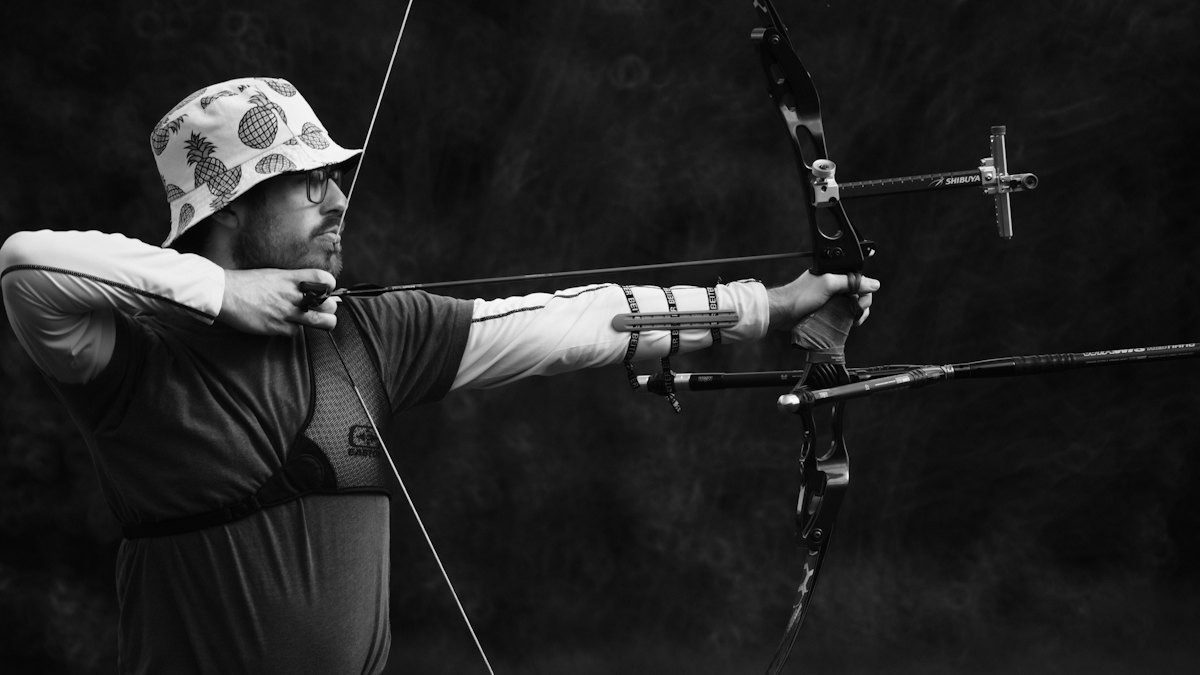
A 20-inch crossbow bolt concentrates front weight almost twice as hard as a 30-inch arrow: the same 100-grain insert that adds +4% FOC on a 28″ arrow adds +6 to +8% on a 20″ bolt. That makes crossbows the easiest platform to reach the 18–20% window — and the easiest to overshoot. Past 22% FOC, short bolts begin to fishtail in crosswind and vertical groups open dramatically at 50 yards and beyond, exactly where crossbow hunters shoot. Practical crossbow high-FOC recipe: 20–22″ bolt, 400–450 grains stock, one 100–150 gr insert-weight head adapter, target 18–20% FOC, and verify with a bare-shaft versus fletched comparison at 20 and 40 yards. Crossbow launch-on-rail mechanics eliminate rest-contact tuning, so the only remaining variable is the bolt's own flex — which is why total weight floors (most makers warranty nothing below 400 grains) matter more here than exotic FOC percentages.
What High FOC Does to Arrow Flight: Drop, Wind & Grouping
Nose-heavy arrows trade flat trajectory for downrange stability. Quantified: a 28″ arrow moving from 12% to 19% FOC at the same launch speed drops roughly 1.5–2.5 inches more at 40 yards and 4–6 inches more at 60 — about one sight-pin step. Wind drift improves in your favor: the higher sectional density of the front-loaded shaft sheds roughly 10–20% less lateral push in a 15 mph crosswind, which is why target archers shooting long-range field rounds often run 15–17% FOC as a compromise. Grouping follows a consistent pattern: inside 30 yards, moderate and high FOC group identically once tuned; at 50–70 yards, the 16–20% arrow usually holds tighter because the heavy nose dampens tail oscillation — provided vanes are at least 2″ and the spine was retuned.
The flight danger zone: past 22% FOC on 2″ vanes, tail oscillation grows visibly — the classic symptom is a broadhead that flies fine at 20 yards but planes sideways at 45+. If you must run extreme FOC (25–30%), pair it with 3″ vanes, a stiffer shaft, and single-bevel heads, and re-zero every pin. Compare adjacent spine candidates on the Arrow Spine Comparison page before ordering.
Common High-FOC Mistakes: Too Much of a Good Thing
Mistake 1 — Chasing FOC on a light arrow
A 340-grain arrow at 24% FOC penetrates less than a 525-grain arrow at 15% FOC. Momentum leads, FOC follows. If total mass is under your game-class floor, add shaft mass (GPI), not just nose mass.
Mistake 2 — Skipping the spine retune
Every +50 gr at the front ≈ ½ grade weaker dynamic spine. A high-FOC build on the stock spine is the number-one cause of “my field points group, my broadheads don't.”
Mistake 3 — Exceeding 22% on short or light vanes
Above 22%, the tail needs real steering authority. Keep 2″ vanes below 20%; move to 3″ vanes or a blazer profile for 20–24%; reserve 25%+ for builds designed around it from the spine chart up.
Mistake 4 — Forgetting the sight picture
18–20% FOC adds about one pin step by 60 yards. Hunters who re-zero at 20 and 30 only discover the extra drop when an elk steps out at 55. Re-verify all pins after any FOC change of more than 3 points.
Frequently Asked Questions
How to build high FOC arrows from a stock setup?Top Question▼
Work the four levers in order of cost: (1) swap the point or broadhead from 100 to 150 grains (+3 to +6% FOC), (2) replace the stock aluminum insert with a 50–75 gr brass insert (+4 to +8% FOC), (3) trim rear weight — 2″ vanes instead of 4″ feathers and a 7 gr nock instead of 12 gr (+2 to +4% FOC), (4) add a 25–50 gr collar behind the insert (+2 to +5% FOC). A stock 12% FOC arrow reaches 18–20% after steps 1 and 2 alone. Retune spine after every step: each +50 gr at the front weakens dynamic spine by roughly half a grade, so a 400-spine shaft that shot bullet holes at 100 gr usually needs a 340 (or a 0.5″ shorter cut) once you land near 150–175 gr of total head weight.
Will an insert weight help with arrow FOC?Top Question▼
Yes — the insert is the single most effective bolt-on FOC part because it sits ahead of the balance point. A 50 gr brass insert on a 28″, 400-grain arrow adds about +4% FOC; a 100 gr insert adds about +8%. Two cautions: first, thread-in weighted inserts require the shaft's inner diameter to match (0.300″, 0.246″, 0.244″ — micro and Deep Six standard differ), so buy for your shaft, not by brand alone. Second, every insert grain weakens dynamic spine, so pair the insert with a paper tune. If the insert alone pushes you past 20% FOC with a 125 gr head, expect to step one spine grade stiffer.
How to add FOC to a Deep Six arrow?Top Question▼
Deep Six systems accept threaded weights ahead of the point: a Deep Six 25–50 gr insert weight, a collared weight slid over the front ferrule area, or heavier Deep Six broadheads (150–200 gr options exist from several makers). Because Deep Six components thread directly into theinsert seat, you can stack: a 25 gr insert plus a 150 gr head plus a 25 gr collar takes a stock 12% arrow to roughly 18–19% on a 28″ shaft. Keep total added front mass under 100 gr unless you re-select spine — the Deep Six seat is strong, but the shaft around it is what has to carry the flex load.
What FOC is best for hunting arrows?▼
For a general hunting arrow, 15–18% FOC is the sweet spot: past Dr. Ashby's ~15% bone-breakage threshold, still inside a normal broadhead-tune window, and forgiving at 30–60 yards. Whitetail arrows do fine at 15–18%; elk, moose, and bear builds reward 18–22%; small-game and 3D arrows are happier at 12–15% where flight stays flat and forgiving. Builds above 22% FOC (the extreme FOC zone Ashby tested at 25–30%) penetrate superbly in test media but need stiffer shafts, stronger vane steers, and more sight-pin compensation for the extra drop.
What FOC should a whitetail deer arrow have?▼
Aim for 15–18% FOC on a 400–450 grain total arrow. Whitetail ribs and shoulders are light enough that a 15% FOC, 100–125 gr broadhead build penetrates fully in most shot angles; the extra 3% up to 18% is cheap insurance for quartering angles and shoulder hits. Practical recipe: a 400-spine, 8.5–9.5 GPI shaft cut to 28″, a 50 gr brass insert, and a 125–150 gr fixed or mechanical head lands almost exactly in that window with no other changes.
What FOC for elk — and does arrow foc for elk differ from deer setups?▼
Elk builds run 18–22% FOC with 450–550 grain total arrows. Elk scapula and heavy rib bone are where Dr. Ashby's penetration data separates moderate from high FOC builds: front mass past the ~15% threshold keeps the shaft driving after bone contact instead of deflecting. Compared to a deer setup, add about 50 grains up front (a 150 gr single-bevel head plus a 75 gr insert) and 50–100 grains of shaft (one spine grade stiffer, e.g. 300 spine class). Momentum — arrow weight times speed — still matters more than FOC alone, so an 18% FOC 525-grain arrow beats a 22% FOC 380-grain arrow on elk every time.
What did Dr. Ashby conclude about heavy arrows and high FOC?▼
Dr. Ed Ashby's decades of field and test-media studies (summarized in his EFOC and UEFOC reports) landed on two headline findings. First, penetration through bone improved sharply once FOC moved past roughly 15%, because the shaft mass ahead of center keeps the arrow driving straight after impact instead of bending around bone. Second, his most extreme test builds paired very high FOC (25–30%) with very heavy total mass (650–900+ grains) and single-bevel broadheads for the deepest test-media penetration on record. His practical takeaway for hunters: total mass and FOC work together — the best results come from adding weight at the front of an already-heavy arrow, not from chasing FOC percentage on a light shaft.
FOC vs arrow weight for penetration — which matters more?▼
Total arrow weight (momentum) is the primary penetration driver; FOC is the multiplier that decides how well that weight keeps driving after impact. A 650-grain arrow at 12% FOC still out-penetrates a 400-grain arrow at 22% FOC — mass deficit cannot be tuned away. But at equal total weight, the higher-FOC arrow wins on bone because the front-heavy shaft resists deflection. The order of operations for most hunters: get total mass to at least 400 grains for deer / 500 for elk, then push FOC from 12% to 15–20% with front weight, then fine-tune spine and broadhead flight.
What does high FOC do to arrow flight?▼
Three measurable effects: (1) more drop — the heavy nose pitches the arc, costing roughly 2–4 fps of effective trajectory and one extra sight pin between 30 and 60 yards versus a 12% FOC build of the same speed; (2) slower planing off the rest — high-FOC arrows need clean launch setup because the nose-heavy shaft reacts harder to rest contact; (3) better downrange stability once steered — past 40 yards a 18–20% arrow with 2″ vanes often groups tighter than the same shaft at 10% because the front mass resists wind deflection. The flight danger zone is above ~22% FOC on lightly-vaned arrows: the tail oscillation grows, broadheads plane, and groups open up fast.
Does high FOC improve arrow grouping and accuracy?▼
It can — with conditions. High FOC improves grouping when (a) the spine is retuned for the added nose weight, (b) vanes are big enough to steer the tail (2″ minimum, 3″ for fixed broadheads past 20% FOC), and (c) your sight pins are re-zeroed for the extra drop. Under those three conditions, 16–20% FOC arrows commonly tighten 60-yard groups and cut wind drift. Ignoring any of the three does the opposite: nose-heavy arrows on untuned spine wobble worse than the stock build. FOC is an accuracy amplifier, not a substitute for a paper tune.
How does FOC affect arrow spine — do I need a stiffer shaft?▼
Yes: every grain you add ahead of the shaft's center weakens dynamic spine, so a high-FOC arrow usually needs a stiffer static shaft than the same arrow at 12% FOC. The working rule: +50 gr at the front ≈ ½ spine grade weaker; +100 gr ≈ 1 full grade; a 250-gr outsert system ≈ 2 grades. That is why extreme FOC builds run 300–250 spine shafts even on 65–70 lb bows. Retune in this order: add front weight first, then paper-tune, then correct with cut length (shorter = stiffer) before buying a different spine — a 0.5″ cut recovers about half a grade cheaply.
Are high FOC crossbow arrows different from compound builds?▼
Yes, in two ways. First, 20–22″ bolts concentrate the same insert weight over a shorter shaft, so a 100 gr insert moves FOC about 1.5× further than it would on a 30″ arrow — start with 100–150 gr total head weight, not 250. Second, crossbows launch the arrow on rails, so the rest-contact part of broadhead tuning is eliminated; the remaining concerns are spine match to the rail-to-limb energy and total bolt weight (many maker warranties floor at 400 grains). The sweet spot is 18–20% FOC on a 450–500 grain bolt: past 22%, short bolts start to fishtail and vertical groups open at 50+ yards.
What are the best arrows for high FOC builds — and do any come with built-in FOC?▼
High-FOC builds want heavy-GPI, small-diameter or heavy-wall carbon: Easton FMJ and Axis (aluminum-jacket carbon), Victory VAP and Rip TKO sport weights, Gold Tip Pierce Platinum, and Black Eagle Deep Impact are the usual picks because their 9–12 GPI shafts give you mass to shift forward without a noodle-soft spine. No mainstream arrow ships with truly built-in high FOC — stock arrows arrive near 10–13% — but brass-insert versions of several shafts (and weighted outsert systems) get you to 18–20% with no custom machining. What matters more than brand for high FOC: a straightness rating of ±0.003″ or better, GPI above 8.5, and a maker that publishes insert weight options for the shaft's inside diameter.
How do FOC arrow inserts, outserts and collars differ?▼
Inserts sit inside the shaft's front bore: 15–25 gr stock aluminum, 50–100 gr brass or stainless — the standard FOC move. Outserts clamp or press over the outside of the shaft and carry the point ahead of it: 40–80 gr of steel body plus whatever point weight you load, good for +10–14% FOC but demanding a full spine re-selection. Collars slide over the shaft externally and lock behind the insert: 25–50 gr that shifts FOC +2 to +5% without touching the threads — the cleanest option for sealed Deep Six-style systems. Order of preference for most hunters: brass insert first, collar second, outsert only when the build is designed around it from the spine chart up.
Arrow Tools & Calculators
Arrow Spine Chart
Free 2026 arrow spine chart and interactive calculator. Inst...
Arrow Kinetic Energy Calculator
Arrow kinetic energy calculator: enter arrow weight and spee...
Bow Draw Length Calculator
Bow draw length calculator: enter wingspan to get draw lengt...
Arrow Spine Calculator
Arrow spine calculator: enter bow type, draw weight, draw le...
Arrow FOC Calculator
Arrow FOC calculator: enter arrow length and component weigh...
Arrow Weight Calculator
Arrow weight calculator: pick shaft GPI, cut length, point, ...
Arrow Trajectory Calculator
Arrow trajectory calculator: enter arrow speed, weight, dist...
Bow Draw Weight Calculator
Bow draw weight calculator by age, build, experience and gam...
Crossbow Ballistic Calculator
Crossbow ballistic calculator: bolt speed, drop and kinetic ...
Compound Bow Arrow Chart
Official compound bow arrow spine chart. Quickly match arrow...
Easton Arrow Selector
Free 2026 Easton arrow selector and shaft spine calculator. ...
Gold Tip Arrow Calculator
Calculate your exact Gold Tip arrow spine size or view the o...
400 Spine Arrows
400 spine arrows: fit windows for 45-60 lb compound and 40-5...
500-1400 Spine Arrows
500 to 1400 spine arrows by draw weight: 500 spine for 40-50...
Brand Spine Chart Decode
Decode spine charts for Blackout, Bloodsport, Beman, Sirius,...
Wood Arrow Spine Calculator
Wood arrow spine calculator: pick bow type, draw weight, arr...
Aluminum Arrow Spine Chart
Aluminum arrow spine chart: decode 4-digit codes (1716–2317)...
The Math Behind the Build
How to Calculate Arrow Speed
Multi-dimensional comparison of arrow speed calculation meth...
How to Calculate Arrow FOC
Step-by-step SOP guide for arrow FOC calculation: balance po...
How to Calculate Arrow Weight
Scenario-card deconstruction of arrow weight issues: GPI dec...
How to Calculate Arrow Kinetic Energy: KE & Momentum
Decision-dashboard trade-off matrix for arrow kinetic energy...
How to Calculate Arrow Spine: Stiffness & Bow Matching
Step-by-step SOP for arrow spine calculation: static spine (...
How to Calculate Arrow Length: Draw Length & Sizing
First-principles derivation of arrow length: draw length mea...
How to Calculate Arrow Trajectory: Drop, Drag & Wind
Empirical scenario-card analysis of arrow trajectory: parabo...